
Imbalanced Classification under Capacity Constraints
arXiv stat.ML / 5/6/2026
📰 NewsIdeas & Deep AnalysisModels & Research
Key Points
- The paper tackles imbalanced classification where the minority (positive) class is underrepresented and confirming a potential positive is costly under limited operational capacity.
- It introduces a framework for sequential/online decision-making that enforces a user-defined bound on the proportion (rate) of observations labeled as positive while maximizing detection performance.
- The method can be implemented with standard learning techniques and extends naturally to real-time settings where predictions are made as data arrives.
- Experiments indicate that explicitly modeling capacity constraints yields substantial gains over classical baselines, including resampling approaches like SMOTE that do not directly control the positive selection rate.
Related Articles

Top 10 Free AI Tools for Students in 2026: The Ultimate Study Guide
Dev.to

AI as Your Contingency Co-Pilot: Automating Wedding Day 'What-Ifs'
Dev.to
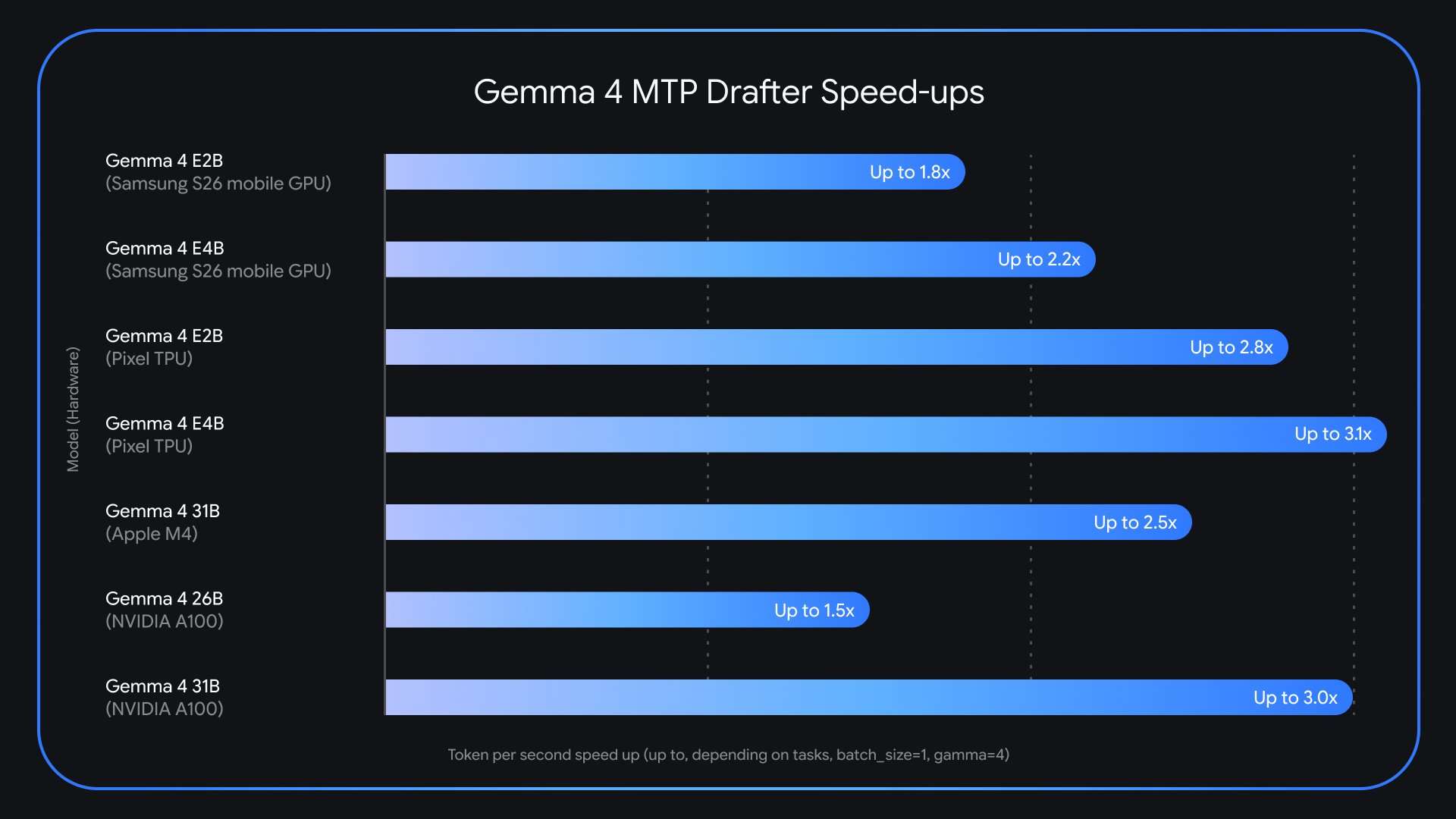
Google AI Releases Multi-Token Prediction (MTP) Drafters for Gemma 4: Delivering Up to 3x Faster Inference Without Quality Loss
MarkTechPost
When Claude Hallucinates in Court: The Latham & Watkins Incident and What It Means for Attorney Liability
MarkTechPost
Solidity LM surpasses Opus
Reddit r/LocalLLaMA


