
SpecTM: Spectral Targeted Masking for Trustworthy Foundation Models
arXiv cs.AI / 3/24/2026
💬 OpinionSignals & Early TrendsIdeas & Deep AnalysisModels & Research
Key Points
- Foundation models for Earth observation are often trained with stochastic masking that may not enforce physics constraints, limiting trustworthiness for predictive uses such as public-health guidance.
- The paper introduces SpecTM (Spectral Targeted Masking), a physics-informed pretraining objective that encourages targeted-band reconstruction using cross-spectral context.
- SpecTM uses an adaptable multi-task self-supervised framework (band reconstruction, bio-optical index inference, and 8-day-ahead temporal prediction) to learn spectrally intrinsic representations.
- On NASA PACE hyperspectral imagery over Lake Erie for microcystin concentration regression, SpecTM reports improved predictive performance (R^2=0.695 current week; R^2=0.620 8-day-ahead) and gains over baselines, including better label efficiency under extreme scarcity.
- Ablation results indicate targeted masking improves R^2 over random masking (+0.037), and the approach improves interpretability and cross-domain physics-informed representation learning.
Related Articles
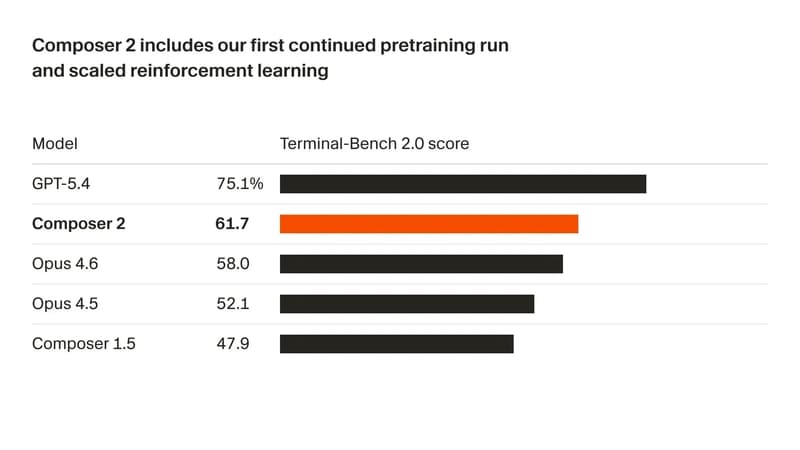
Composer 2: What is new and Compares with Claude Opus 4.6 & GPT-5.4
Dev.to
How UCP Breaks Your E-Commerce Tracking Stack: A Platform-by-Platform Analysis
Dev.to
AI Text Analyzer vs Asking Friends: Which Gives Better Perspective?
Dev.to
[D] Cathie wood claims ai productivity wave is starting, data shows 43% of ceos save 8+ hours weekly
Reddit r/MachineLearning

Microsoft hires top AI researchers from Allen Institute for AI for Suleyman's Superintelligence team
THE DECODER


