
LEO: Graph Attention Network based Hybrid Multi Sensor Extended Object Fusion and Tracking for Autonomous Driving Applications
arXiv cs.LG / 4/3/2026
📰 NewsSignals & Early TrendsIdeas & Deep AnalysisModels & Research
Key Points
- The paper introduces LEO (Learned Extension of Objects), a spatio-temporal Graph Attention Network designed for hybrid multi-sensor fusion to estimate both the shape and trajectory of dynamic extended objects in autonomous driving.
- It aims to combine Bayesian extended-object model robustness with deep learning adaptability by learning fusion weights and enforcing temporal consistency while representing multi-scale, complex geometries (including articulated vehicles).
- LEO uses a task-specific parallelogram ground-truth formulation to train on challenging object forms without requiring the dense annotations typically demanded by alternative deep approaches.
- The method is evaluated for real-time efficiency on the Mercedes-Benz DRIVE PILOT (SAE L3) dataset and is further validated on public datasets like View of Delft (VoD) to demonstrate cross-dataset generalization.
- The approach is reported to generalize across sensor types, configurations, object classes, and regions, remaining robust for long-range targets.
Related Articles

Black Hat Asia
AI Business

90000 Tech Workers Got Fired This Year and Everyone Is Blaming AI but Thats Not the Whole Story
Dev.to

Microsoft’s $10 Billion Japan Bet Shows the Next AI Battleground Is National Infrastructure
Dev.to
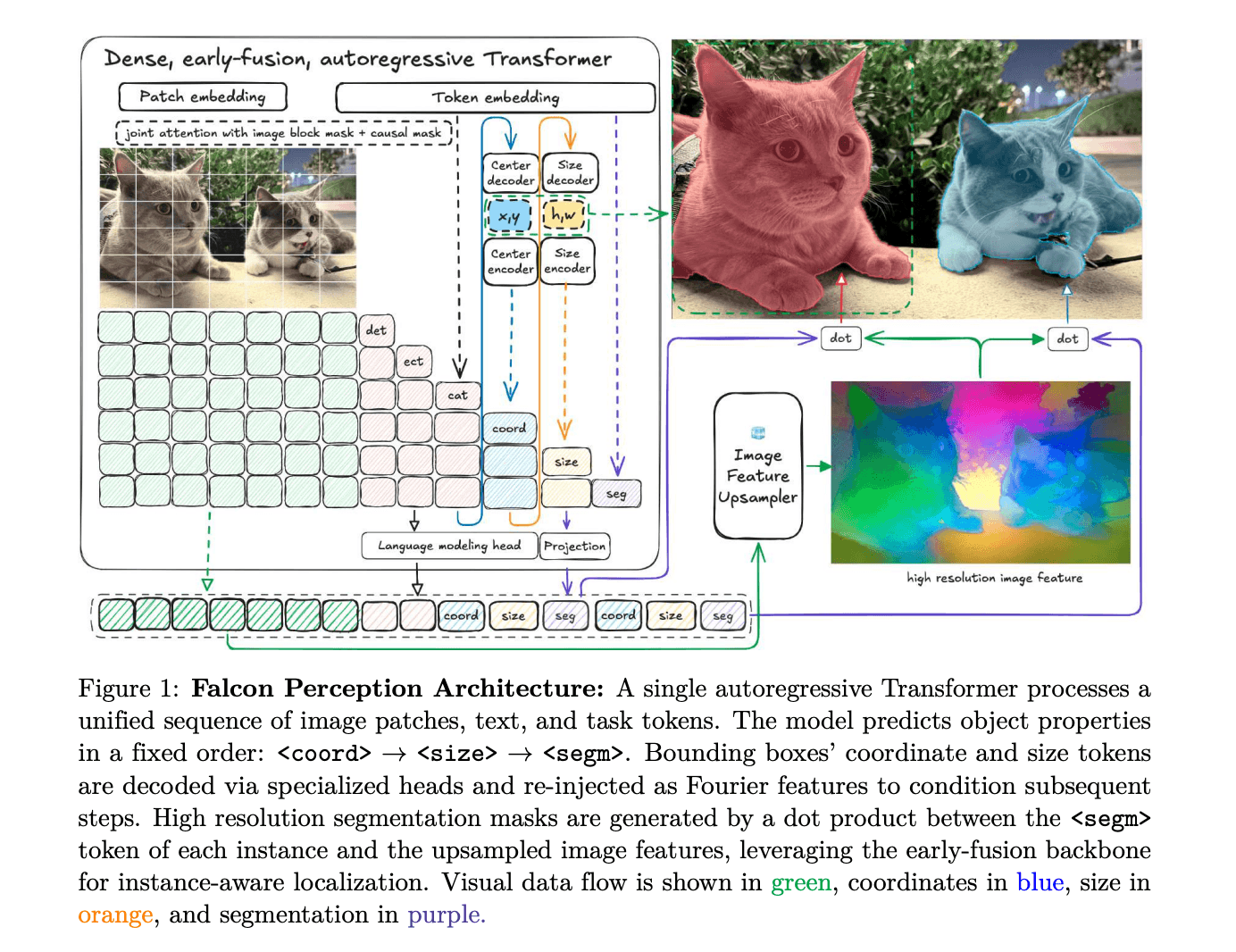
TII Releases Falcon Perception: A 0.6B-Parameter Early-Fusion Transformer for Open-Vocabulary Grounding and Segmentation from Natural Language Prompts
MarkTechPost

Portable eye scanner powered by AI expands access to low-cost community screening
Reddit r/artificial


