
Stability and Generalization for Decentralized Markov SGD
arXiv cs.LG / 5/5/2026
📰 NewsIdeas & Deep AnalysisModels & Research
Key Points
- The paper studies the stability and generalization of decentralized SGD and SGDA when training data are generated by Markov-chain-dependent sampling rather than independent samples.
- It uses a stability-based analytical framework to explain how Markovian dependence and decentralized communication jointly affect generalization.
- The authors derive non-asymptotic generalization bounds that incorporate network topology, Markov chain mixing properties, and the primal-dual dynamics in the optimization process.
- Results extend existing theory for Markov stochastic gradient methods to both decentralized learning and minimax (saddle-point) settings.
- The work specifically addresses analytical challenges arising from correlated data streams and decentralized optimization, providing tools to predict generalization behavior in such systems.
Related Articles
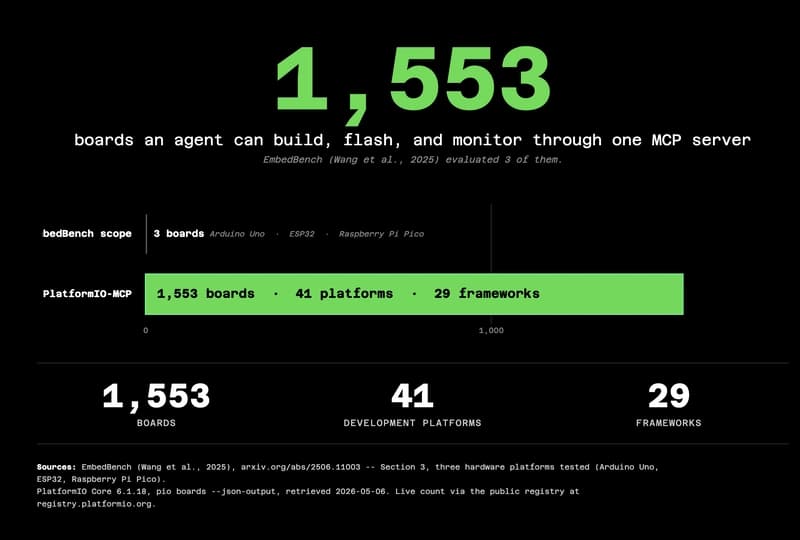
The 55.6% problem: why frontier LLMs fail at embedded code
Dev.to

Four CVEs in a week, all the same shape: when agents execute LLM-generated code
Dev.to
Healthcare AI Is Absorbing Institutional Knowledge It Can't Actually Hold
Reddit r/artificial
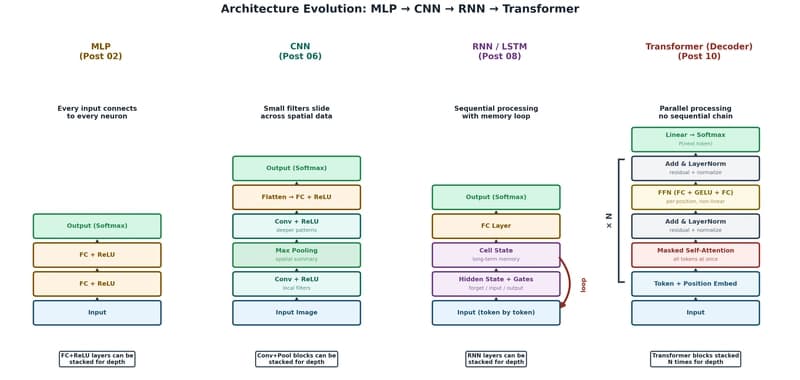
The Transformer: The Architecture Behind Modern AI
Dev.to

Foundational Models Defining a New Era in Vision: A Survey and Outlook
Dev.to


