
Beyond Static Sandboxing: Learned Capability Governance for Autonomous AI Agents
arXiv cs.AI / 4/15/2026
💬 OpinionIdeas & Deep AnalysisModels & Research
Key Points
- The paper identifies a “capability overprovisioning” problem in autonomous AI agent runtimes (e.g., OpenClaw) where agents expose full tool, subagent, and credential capabilities regardless of the task, creating large security risk gaps across task types.
- It argues that existing defenses like NemoClaw container sandboxing and Cisco DefenseClaw skill scanning focus on containment and detection but do not adaptively learn a least-privilege, minimum-capability set per task.
- The proposed Aethelgard framework introduces four-layer adaptive governance to enforce least privilege, including dynamic tool scoping (Capability Governor) and interception of tool calls prior to execution (Safety Router).
- A reinforcement learning component (RL Learning Policy) trains a PPO policy from accumulated audit logs to learn which minimal skills/capabilities are appropriate for each task type.
Related Articles
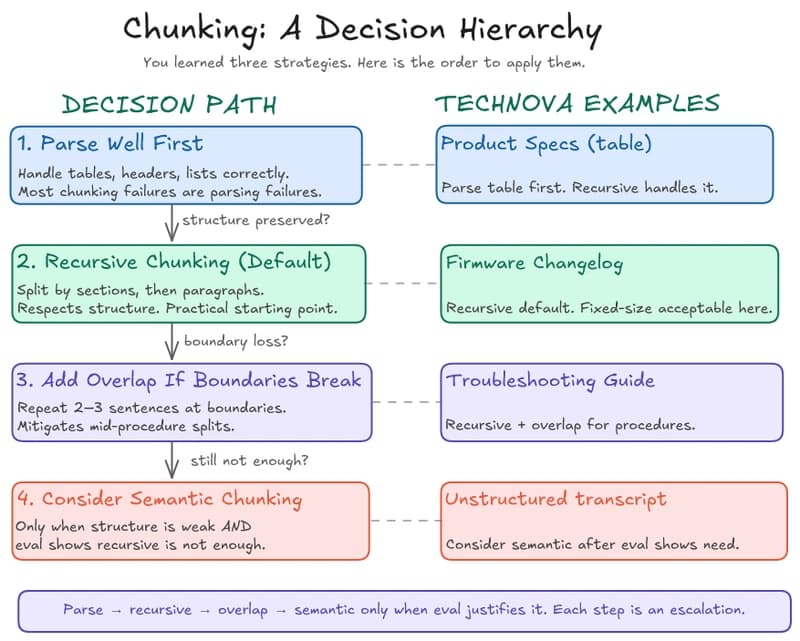
RAG in Practice — Part 4: Chunking, Retrieval, and the Decisions That Break RAG
Dev.to
Why dynamically routing multi-timescale advantages in PPO causes policy collapse (and a simple decoupled fix) [R]
Reddit r/MachineLearning

How AI Interview Assistants Are Changing Job Preparation in 2026
Dev.to

Consciousness in Artificial Intelligence: Insights from the Science ofConsciousness
Dev.to

NEW PROMPT INJECTION
Dev.to


