
A Two-Stage LLM Framework for Accessible and Verified XAI Explanations
arXiv cs.AI / 4/15/2026
💬 OpinionSignals & Early TrendsIdeas & Deep AnalysisModels & Research
Key Points
- The paper argues that LLM-generated XAI narratives often lack guarantees of accuracy, faithfulness, and completeness, and that existing evaluation is too subjective or post-hoc to protect end-users.
- It proposes a Two-Stage LLM Meta-Verification Framework with an Explainer LLM to convert XAI outputs into natural language, and a Verifier LLM that checks faithfulness, coherence, completeness, and hallucination risk.
- An iterative refeed loop uses the Verifier’s feedback to refine the narratives, aiming to improve reliability rather than only score explanations after the fact.
- Experiments across five XAI techniques and datasets, using three families of open-weight LLMs, find that verification helps filter unreliable explanations while improving linguistic accessibility versus using raw XAI outputs.
- The authors analyze Entropy Production Rate (EPR) during refinement and conclude that Verifier feedback increasingly guides the Explainer toward more stable and coherent reasoning.
Related Articles

Black Hat Asia
AI Business

The Complete Guide to Better Meeting Productivity with AI Note-Taking
Dev.to

5 Ways Real-Time AI Can Boost Your Sales Call Performance
Dev.to
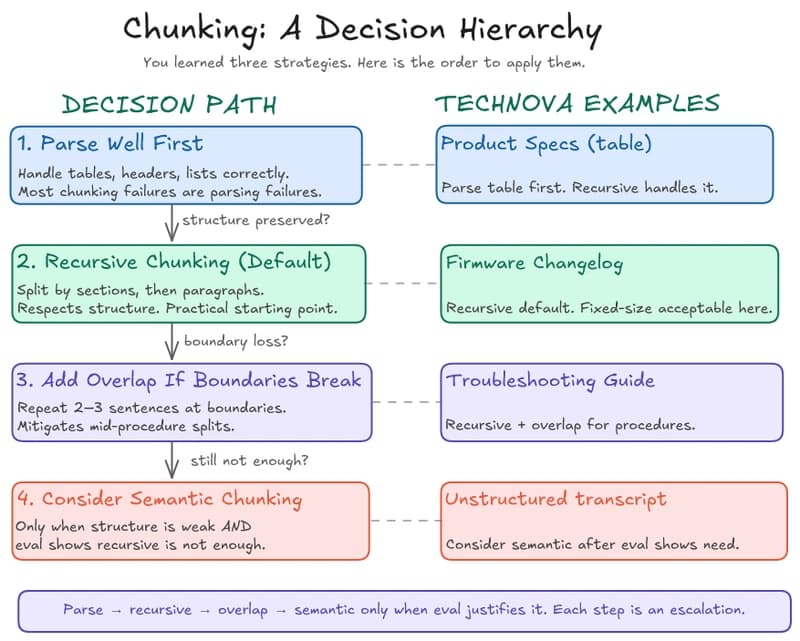
RAG in Practice — Part 4: Chunking, Retrieval, and the Decisions That Break RAG
Dev.to
Why dynamically routing multi-timescale advantages in PPO causes policy collapse (and a simple decoupled fix) [R]
Reddit r/MachineLearning


