
Navigating the Prompt Space: Improving LLM Classification of Social Science Texts Through Prompt Engineering
arXiv cs.CL / 3/27/2026
💬 OpinionIdeas & Deep AnalysisModels & Research
Key Points
- The paper investigates how prompt engineering choices affect LLM-based classification performance for social science texts, targeting improvements in accuracy and cost efficiency compared with traditional computational methods.
- It systematically varies three prompt components—label descriptions, instructional nudges, and few-shot examples—across two example tasks to identify what reliably boosts results.
- Results indicate that adding only a minimal amount of prompt context produces the largest performance gains, while additional context beyond that often delivers diminishing returns.
- The study finds that increasing prompt context can sometimes reduce accuracy, highlighting that “more prompting” is not universally beneficial.
- Performance is shown to vary substantially across different LLMs, tasks, and batch sizes, implying each classification setup needs individual validation rather than one-size-fits-all prompt rules.
広告
Related Articles
Got My 39-Agent System Audited Live. Here's What the Maturity Scorecard Revealed.
Dev.to
The Redline Economy
Dev.to
$500 GPU outperforms Claude Sonnet on coding benchmarks
Dev.to
From Scattershot to Sniper: AI for Hyper-Personalized Media Lists
Dev.to
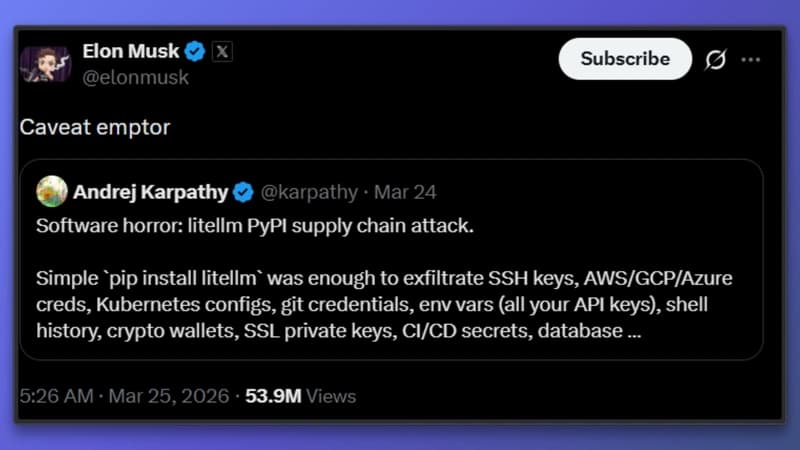
The LiteLLM Supply Chain Attack: A Wake-Up Call for AI Infrastructure
Dev.to


