
Physics-Informed Neural Networks for Source Inversion and Parameters Estimation in Atmospheric Dispersion
arXiv stat.ML / 4/9/2026
💬 OpinionIdeas & Deep AnalysisModels & Research
Key Points
- The paper proposes an extension of physics-informed neural networks (PINNs) to perform joint atmospheric emission source inversion and simultaneous estimation of unknown advection–diffusion parameters.
- It formulates the problem for both 2D and 3D advection–diffusion PDEs with space- and time-varying, unknown velocity and diffusion coefficients, using the governing PDE as a coupling constraint across all unknowns.
- A weighted adaptive strategy based on neural tangent kernels is introduced to improve solving a highly ill-posed inverse problem when measurement data are scarce.
- The authors report numerical experiments with different realistic measurement setups and demonstrate robustness to additional noise in the observations.
- The overall contribution is a more data-efficient PINN methodology for environmental monitoring tasks where source locations and governing transport parameters must be recovered together.
Related Articles

Big Tech firms are accelerating AI investments and integration, while regulators and companies focus on safety and responsible adoption.
Dev.to

Could it be that this take is not too far fetched?
Reddit r/LocalLLaMA
npm audit Is Broken — Here's the Claude Code Skill I Built to Fix It
Dev.to

Meta Launches Muse Spark: A New AI Model for Everyday Use
Dev.to
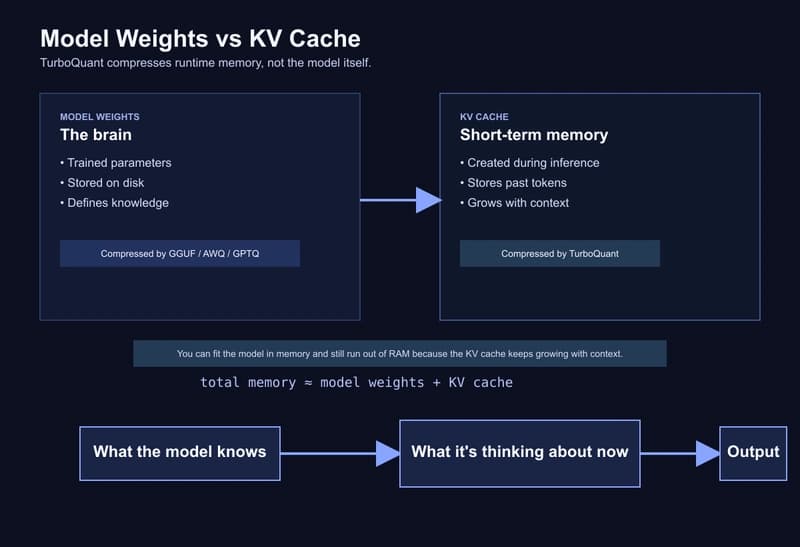
TurboQuant on a MacBook: building a one-command local stack with Ollama, MLX, and an automatic routing proxy
Dev.to


