
Towards High-Consistency Embodied World Model with Multi-View Trajectory Videos
arXiv cs.RO / 4/1/2026
💬 OpinionIdeas & Deep AnalysisModels & Research
Key Points
- The paper introduces MTV-World, an embodied world model designed to improve consistency between predicted robotic actions and real-world physical interactions.
- Instead of feeding low-level joint actions directly for control, it uses multi-view trajectory-video inputs derived from camera parameters and Cartesian-space transformations to drive visuomotor prediction.
- Because projecting 3D actions into 2D views loses spatial information, the method adds a multi-view framework that compensates for that loss and targets higher physical-world consistency.
- It forecasts future frames conditioned on an initial frame for each view and evaluates motion precision and object interaction accuracy using an auto-evaluation pipeline that combines multimodal large models with video object segmentation.
- For spatial consistency, the authors define object location matching and use the Jaccard Index as an evaluation metric, reporting strong performance in complex dual-arm scenarios.
Related Articles

Show HN: 1-Bit Bonsai, the First Commercially Viable 1-Bit LLMs
Dev.to

I Built an AI Agent That Can Write Its Own Tools When It Gets Stuck
Dev.to

Agent Self-Discovery: How AI Agents Find Their Own Wallets
Dev.to
[P] Federated Adversarial Learning
Reddit r/MachineLearning
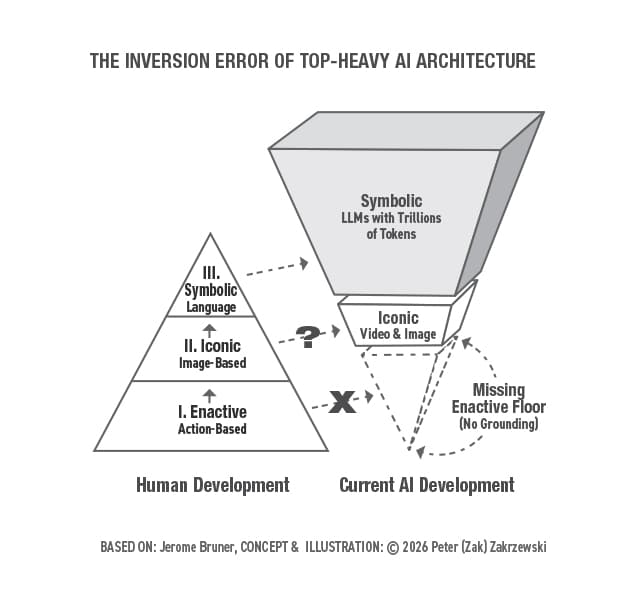
The Inversion Error: Why Safe AGI Requires an Enactive Floor and State-Space Reversibility
Towards Data Science


