
ACDC: Adaptive Curriculum Planning with Dynamic Contrastive Control for Goal-Conditioned Reinforcement Learning in Robotic Manipulation
arXiv cs.RO / 4/15/2026
💬 OpinionIdeas & Deep AnalysisModels & Research
Key Points
- The paper introduces ACDC (Adaptive Curriculum Planning with Dynamic Contrastive Control) for goal-conditioned reinforcement learning in robotic manipulation, aiming to improve over experience-prioritization-based methods.
- ACDC combines an Adaptive Curriculum (AC) planner that dynamically balances diversity-driven exploration and quality-driven exploitation using metrics like success rate and training progress.
- The Dynamic Contrastive (DC) control component executes the planned curriculum via norm-constrained contrastive learning, using magnitude-guided experience selection to match the current learning focus.
- Experiments on challenging robotic manipulation tasks report that ACDC outperforms state-of-the-art baselines in both sample efficiency and final task success rate.
Related Articles
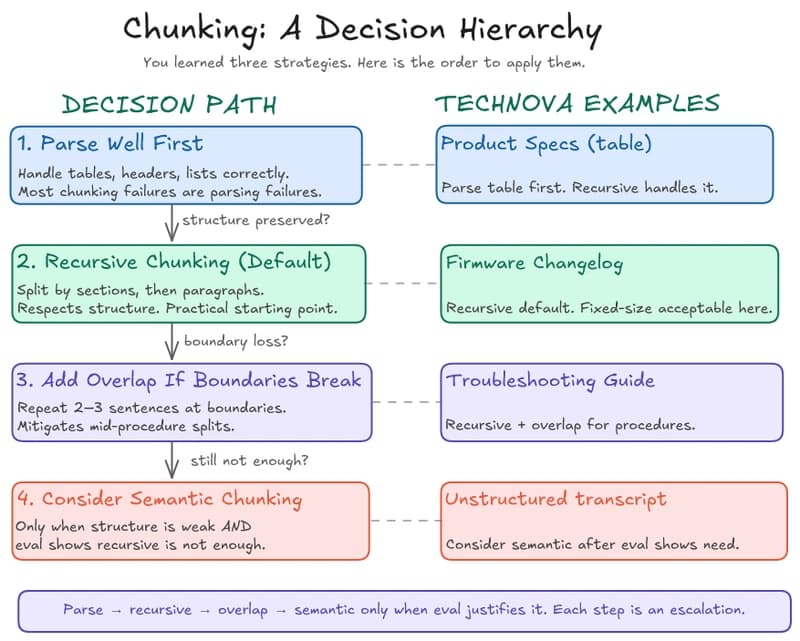
RAG in Practice — Part 4: Chunking, Retrieval, and the Decisions That Break RAG
Dev.to
Why dynamically routing multi-timescale advantages in PPO causes policy collapse (and a simple decoupled fix) [R]
Reddit r/MachineLearning

How AI Interview Assistants Are Changing Job Preparation in 2026
Dev.to

Consciousness in Artificial Intelligence: Insights from the Science ofConsciousness
Dev.to

NEW PROMPT INJECTION
Dev.to


