
PolicyLLM: Towards Excellent Comprehension of Public Policy for Large Language Models
arXiv cs.CL / 4/15/2026
📰 NewsSignals & Early TrendsIdeas & Deep AnalysisModels & Research
Key Points
- The paper introduces PolicyBench, a large-scale cross-system US–China benchmark (21K cases) designed to evaluate how well large language models comprehend and reason about public-policy content.
- It assesses three policy-related capabilities—memorization, understanding, and application—grounded in Bloom’s taxonomy to cover both knowledge recall and real-world scenario reasoning.
- The work proposes PolicyMoE, a domain-specialized Mixture-of-Experts model with expert modules aligned to the different cognitive levels tested by the benchmark.
- Results show LLMs perform relatively better on application-oriented policy tasks than on pure memorization or conceptual understanding, with the strongest accuracy on structured reasoning tasks.
- The authors identify current limitations in policy understanding and outline directions for building more reliable, policy-focused LLM systems.
Related Articles

Black Hat Asia
AI Business

The Complete Guide to Better Meeting Productivity with AI Note-Taking
Dev.to

5 Ways Real-Time AI Can Boost Your Sales Call Performance
Dev.to
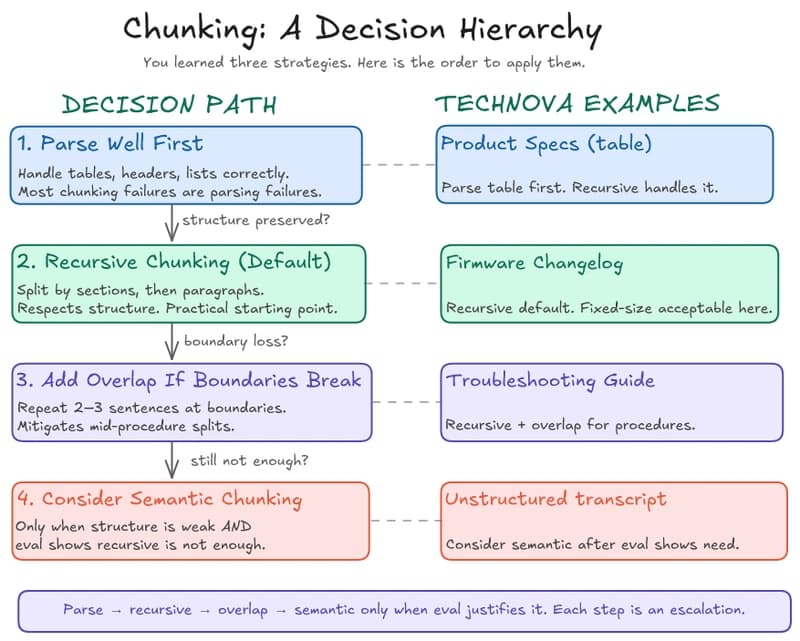
RAG in Practice — Part 4: Chunking, Retrieval, and the Decisions That Break RAG
Dev.to
Why dynamically routing multi-timescale advantages in PPO causes policy collapse (and a simple decoupled fix) [R]
Reddit r/MachineLearning


