
Uncertainty Guided Exploratory Trajectory Optimization for Sampling-Based Model Predictive Control
arXiv cs.RO / 4/15/2026
📰 NewsSignals & Early TrendsIdeas & Deep AnalysisModels & Research
Key Points
- The paper introduces Uncertainty Guided Exploratory Trajectory Optimization (UGE-TO), which improves sampling-based trajectory optimization by producing well-separated samples for broader configuration-space coverage.
- UGE-TO represents trajectories as probability distributions derived from uncertainty ellipsoids and uses distributional separation enforced via Hellinger distance to avoid premature convergence to local minima.
- The work extends UGE-TO to UGE-MPC by integrating it into sampling-based model predictive control, aiming to increase exploration while maintaining the same sampling budget.
- Experiments and real-world validations show UGE-MPC achieves faster convergence (72.1% faster in obstacle-free settings) and higher success rates in cluttered environments (66% faster with a 6.7% higher success rate than the best baseline).
- The authors report improved robustness particularly in scenarios requiring large deviations from nominal trajectories to avoid failures and provide project code publicly.
Related Articles

Black Hat Asia
AI Business
The Complete Guide to Better Meeting Productivity with AI Note-Taking
Dev.to
5 Ways Real-Time AI Can Boost Your Sales Call Performance
Dev.to
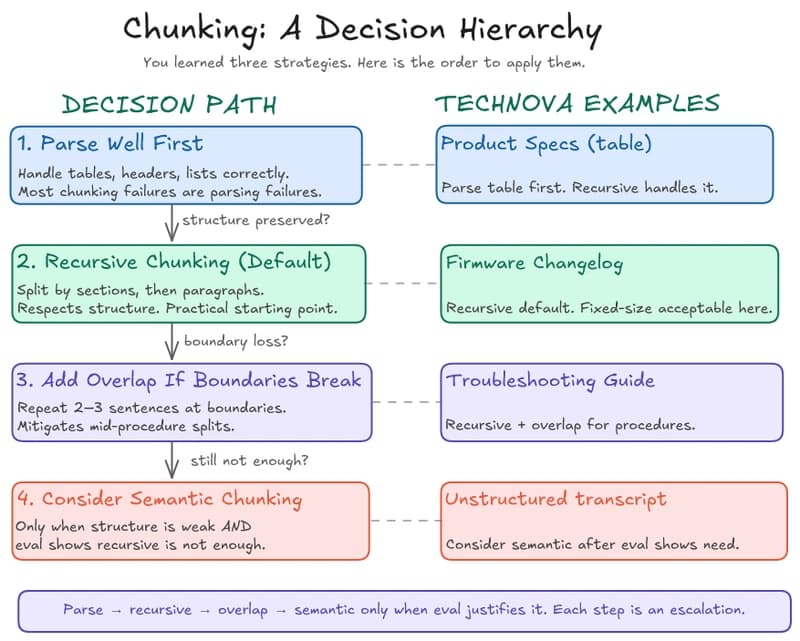
RAG in Practice — Part 4: Chunking, Retrieval, and the Decisions That Break RAG
Dev.to
Why dynamically routing multi-timescale advantages in PPO causes policy collapse (and a simple decoupled fix) [R]
Reddit r/MachineLearning


