
Reward Modeling from Natural Language Human Feedback
arXiv cs.CL / 5/4/2026
💬 OpinionIdeas & Deep AnalysisModels & Research
Key Points
- The paper argues that reward modeling trained on binary preference labels can cause generative reward models to “game” the labels using superficial or unjustified critiques, which injects significant noise into the reinforcement-learning reward signal.
- It proposes RM-NLHF (Reward Modeling from Natural Language Human Feedback), which uses similarity between model-generated and human natural-language critiques to produce richer process-based reward signals.
- To reduce reliance on large-scale human critique data, the authors introduce Meta Reward Model (MetaRM), which learns to predict process rewards from critique-containing datasets and then generalizes to data without human critiques.
- Experiments across multiple benchmarks show that RM-NLHF (and the MetaRM approach) consistently outperforms state-of-the-art GRMs trained using outcome-only reward supervision.
- Overall, the work supports the idea that integrating natural-language feedback improves reward modeling quality compared with supervision limited to binary outcomes.
Related Articles
Top 10 Free AI Tools for Students in 2026: The Ultimate Study Guide
Dev.to
AI as Your Contingency Co-Pilot: Automating Wedding Day 'What-Ifs'
Dev.to
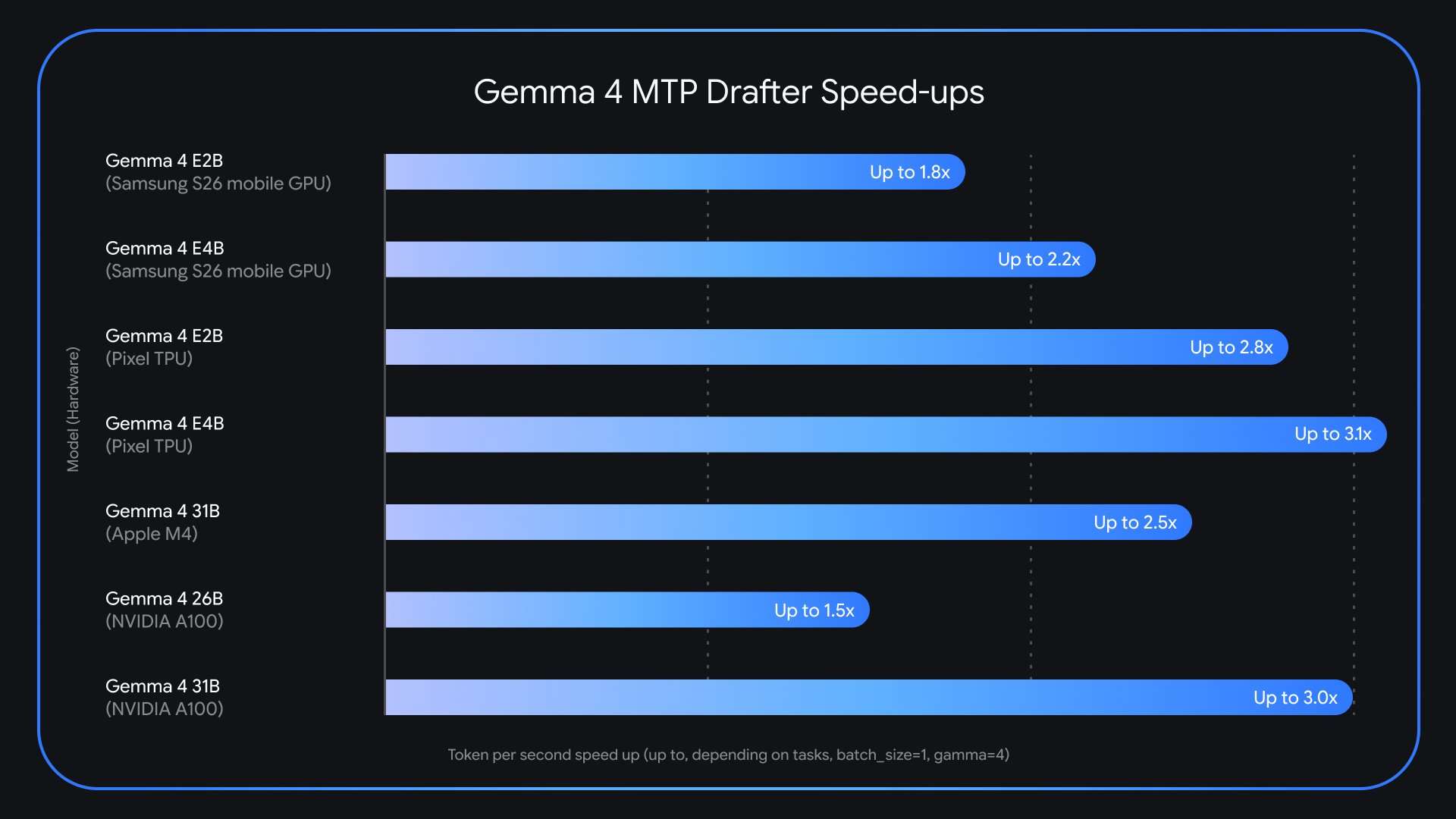
Google AI Releases Multi-Token Prediction (MTP) Drafters for Gemma 4: Delivering Up to 3x Faster Inference Without Quality Loss
MarkTechPost
When Claude Hallucinates in Court: The Latham & Watkins Incident and What It Means for Attorney Liability
MarkTechPost
Solidity LM surpasses Opus
Reddit r/LocalLLaMA


