
MAST: Mask-Guided Attention Mass Allocation for Training-Free Multi-Style Transfer
arXiv cs.CV / 4/15/2026
📰 NewsSignals & Early TrendsIdeas & Deep AnalysisModels & Research
Key Points
- The paper introduces MAST, a training-free diffusion attention framework for multi-style image transfer that targets common problems like boundary artifacts, unstable stylization, and structural inconsistency.
- MAST uses four connected modules—Layout-preserving Query Anchoring, Logit-level Attention Mass Allocation, Sharpness-aware Temperature Scaling, and Discrepancy-aware Detail Injection—to control how content and multiple style representations interact.
- Layout-preserving Query Anchoring is designed to prevent global layout collapse by anchoring semantic structure using content queries.
- Logit-level Attention Mass Allocation deterministically redistributes attention probability mass across spatial regions to fuse multiple styles while reducing boundary artifacts.
- Experiments reported in the study indicate that MAST maintains structural consistency and texture fidelity while improving robustness as the number of applied styles increases.
Related Articles

Black Hat Asia
AI Business

The Complete Guide to Better Meeting Productivity with AI Note-Taking
Dev.to

5 Ways Real-Time AI Can Boost Your Sales Call Performance
Dev.to
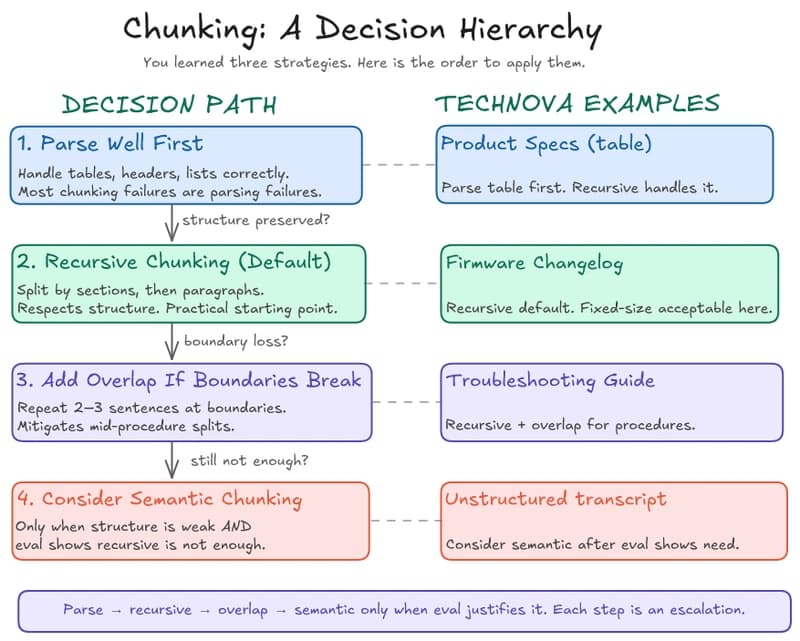
RAG in Practice — Part 4: Chunking, Retrieval, and the Decisions That Break RAG
Dev.to
Why dynamically routing multi-timescale advantages in PPO causes policy collapse (and a simple decoupled fix) [R]
Reddit r/MachineLearning


