
GAMMA-Net: Adaptive Long-Horizon Traffic Spatio-Temporal Forecasting Model based on Interleaved Graph Attention and Multi-Axis Mamba
arXiv cs.AI / 4/21/2026
📰 NewsDeveloper Stack & InfrastructureSignals & Early TrendsModels & Research
Key Points
- The paper proposes GAMMA-Net, a long-horizon traffic spatio-temporal forecasting model that combines Graph Attention Networks (GAT) with multi-axis Mamba (selective state space models) to better capture complex dependencies in traffic data.
- The GAT component adaptively reweights the influence of nodes in the traffic graph, enabling dynamic spatial dependency modeling conditioned on real-time conditions.
- The Mamba module is designed to model long-term temporal and spatial dynamics efficiently, avoiding the high computational cost typical of conventional recurrent architectures.
- Experiments on multiple benchmark datasets (METR-LA, PEMS-BAY, PEMS03/04/07/08) show GAMMA-Net achieves up to a 16.25% MAE reduction versus baseline state-of-the-art methods across various prediction horizons.
- Ablation results confirm that both the spatial (GAT) and temporal (Mamba) components contribute critically and complement each other to improve forecasting accuracy.
Related Articles

¿Hasta qué punto podría la IA reemplazarnos en nuestros trabajos? A veces creo que la gente exagera un poco.
Reddit r/artificial
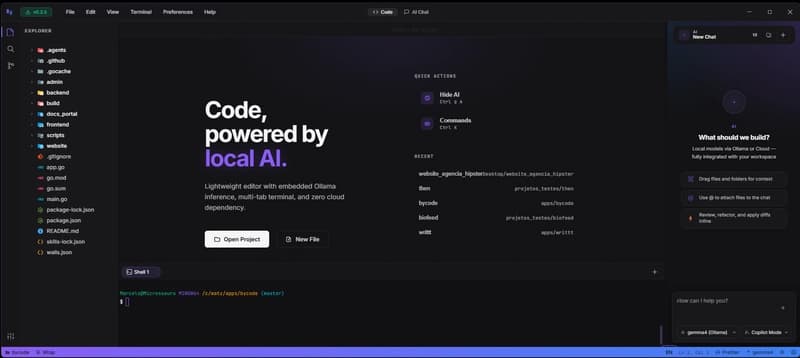
Why I Built byCode: A 100% Local, Privacy-First AI IDE
Dev.to

Magnificent irony as Meta staff unhappy about running surveillance software on work PCs
The Register
v0.21.1
Ollama Releases
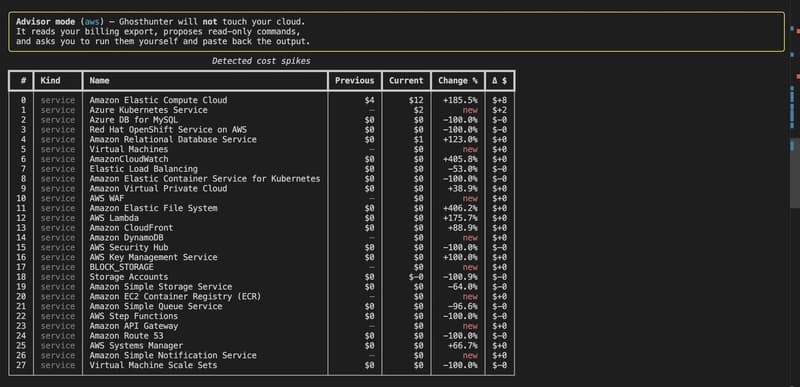
How I Built an AI Agent That Investigates Cloud Bill Spikes (Architecture Inside)
Dev.to


