
How Class Ontology and Data Scale Affect Audio Transfer Learning
arXiv cs.LG / 3/27/2026
💬 OpinionIdeas & Deep AnalysisModels & Research
Key Points
- The paper conducts a rigorous study of audio-to-audio transfer learning by pre-training different model states on ontology-based subsets of AudioSet and then fine-tuning on three downstream computer audition tasks (acoustic scene, bird activity, and speech command recognition).
- It finds that scaling pre-training data—both by increasing the number of samples and by expanding the number of classes—improves transfer learning performance.
- The study reports that this scaling benefit is often outweighed by how similar the pre-training data is to the downstream task, which can cause the model to learn sufficiently comparable features.
- The work frames transfer learning as still having open mechanistic questions and aims to clarify when and why it works in the audio domain specifically.
広告
Related Articles
Got My 39-Agent System Audited Live. Here's What the Maturity Scorecard Revealed.
Dev.to
The Redline Economy
Dev.to
$500 GPU outperforms Claude Sonnet on coding benchmarks
Dev.to
From Scattershot to Sniper: AI for Hyper-Personalized Media Lists
Dev.to
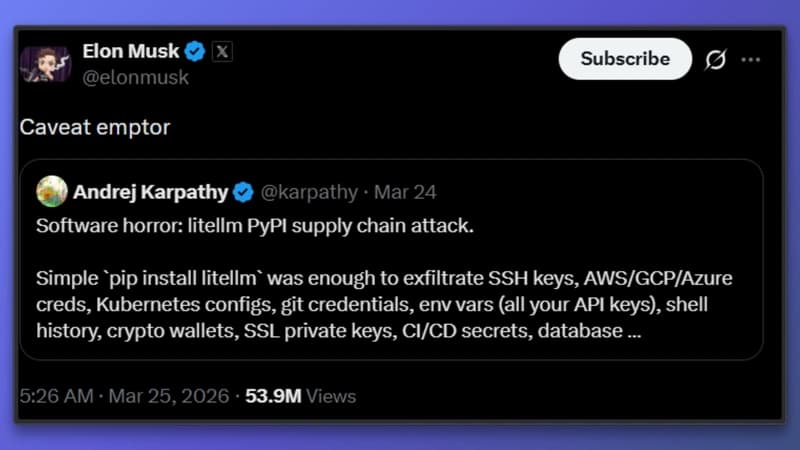
The LiteLLM Supply Chain Attack: A Wake-Up Call for AI Infrastructure
Dev.to


