
Enhancing Visual Question Answering with Multimodal LLMs via Chain-of-Question Guided Retrieval-Augmented Generation
arXiv cs.CV / 5/6/2026
📰 NewsDeveloper Stack & InfrastructureIdeas & Deep AnalysisModels & Research
Key Points
- The paper proposes improving open-domain Visual Question Answering (VQA) by integrating multimodal LLMs with retrieval-augmented generation (RAG) more effectively.
- It introduces a logical prompting strategy called CoVQD that combines Chain-of-Thought reasoning with Visual Question Decomposition to better steer retrieval toward relevant knowledge.
- Building on CoVQD, the authors present a new framework, CoVQD-guided RAG (CgRAG), designed to provide more coherent and comprehensive external knowledge during multimodal inference.
- Experiments on E-VQA, InfoSeek, and OKVQA benchmarks show that the approach improves performance and generalization/reliability in complex cross-domain VQA settings.
- Overall, the work advances retrieval-based VQA by coupling structured visual-text reasoning with knowledge acquisition to make multimodal LLM answers more dependable.
Related Articles

Top 10 Free AI Tools for Students in 2026: The Ultimate Study Guide
Dev.to

SIFS (SIFS Is Fast Search) - local code search for coding agents
Dev.to

AI as Your Contingency Co-Pilot: Automating Wedding Day 'What-Ifs'
Dev.to
BizNode's semantic memory (Qdrant) makes your bot smarter over time — it remembers past conversations and answers...
Dev.to
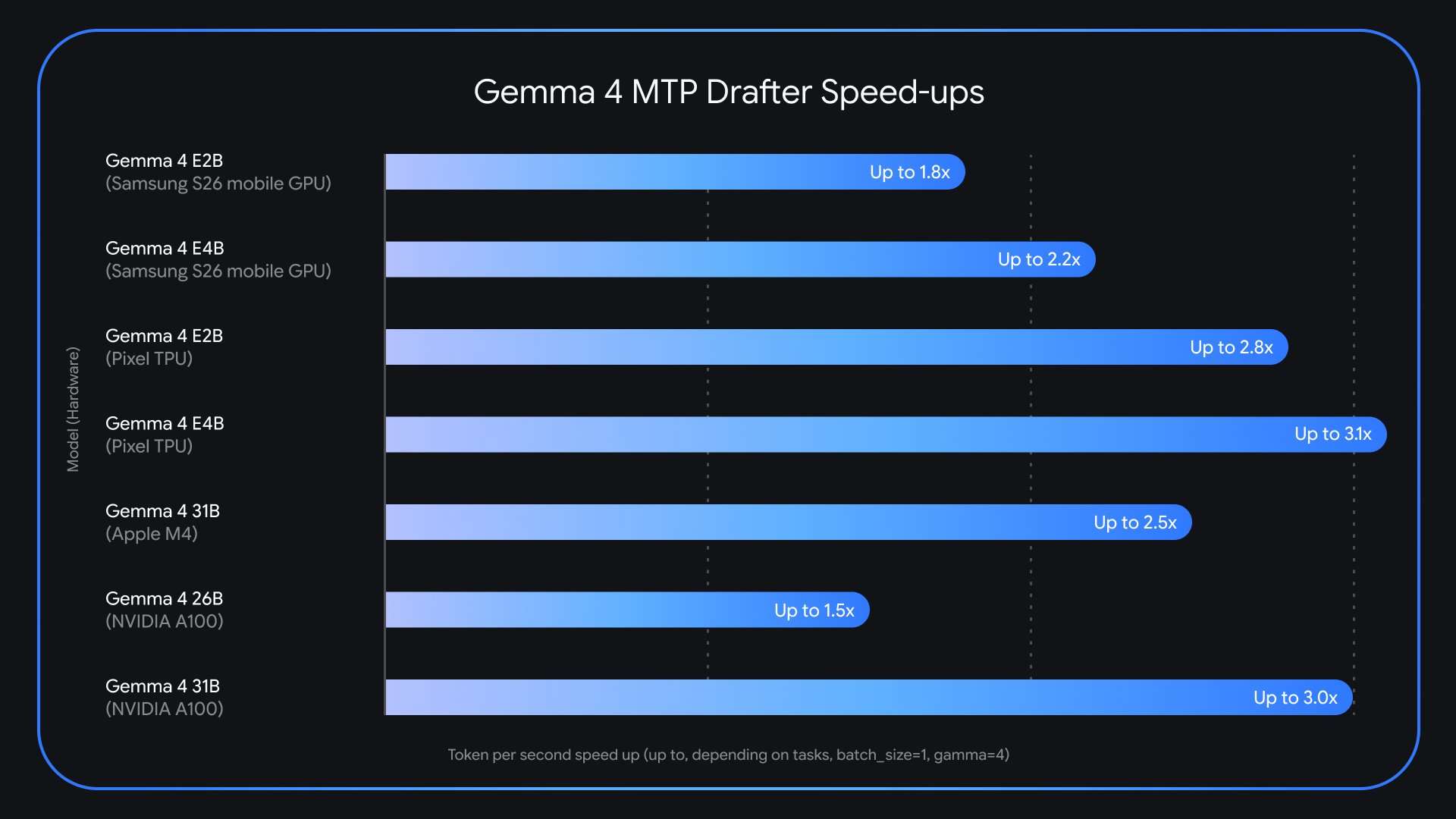
Google AI Releases Multi-Token Prediction (MTP) Drafters for Gemma 4: Delivering Up to 3x Faster Inference Without Quality Loss
MarkTechPost


