
BFORE: Butterfly-Firefly Optimized Retinex Enhancement for Low-Light Image Quality Improvement
arXiv cs.CV / 5/6/2026
📰 NewsIdeas & Deep AnalysisModels & Research
Key Points
- BFORE (Butterfly-Firefly Optimized Retinex Enhancement) is proposed to improve low-light images by automatically tuning parameters in a multi-stage Retinex-based pipeline rather than relying on manually set values.
- The method converts images to HSV, applies AGCWD to the luminance channel, then performs adaptive denoising, with Butterfly Optimization Algorithm (BOA) optimizing MSRCR parameters and the Firefly Algorithm (FA) optimizing AGCWD/denoising parameters.
- A hybrid BOA–FA switching strategy balances global exploration and local exploitation during optimization to better adapt across varying lighting conditions.
- On the LOL benchmark (15 paired test images), BFORE reaches the best reported PSNR of 17.22 dB and achieves notable gains over Histogram Equalization and MSRCR, while also producing brightness statistics closer to the ideal mid-tone.
- Importantly, BFORE outperforms a deep-learning RetinexNet baseline in both PSNR (17.22 vs 16.77 dB) and SSIM (0.5417 vs 0.4252) without using any training data, with optimization itself driving sizable improvements versus an unoptimized pipeline.
Related Articles

Top 10 Free AI Tools for Students in 2026: The Ultimate Study Guide
Dev.to

AI as Your Contingency Co-Pilot: Automating Wedding Day 'What-Ifs'
Dev.to
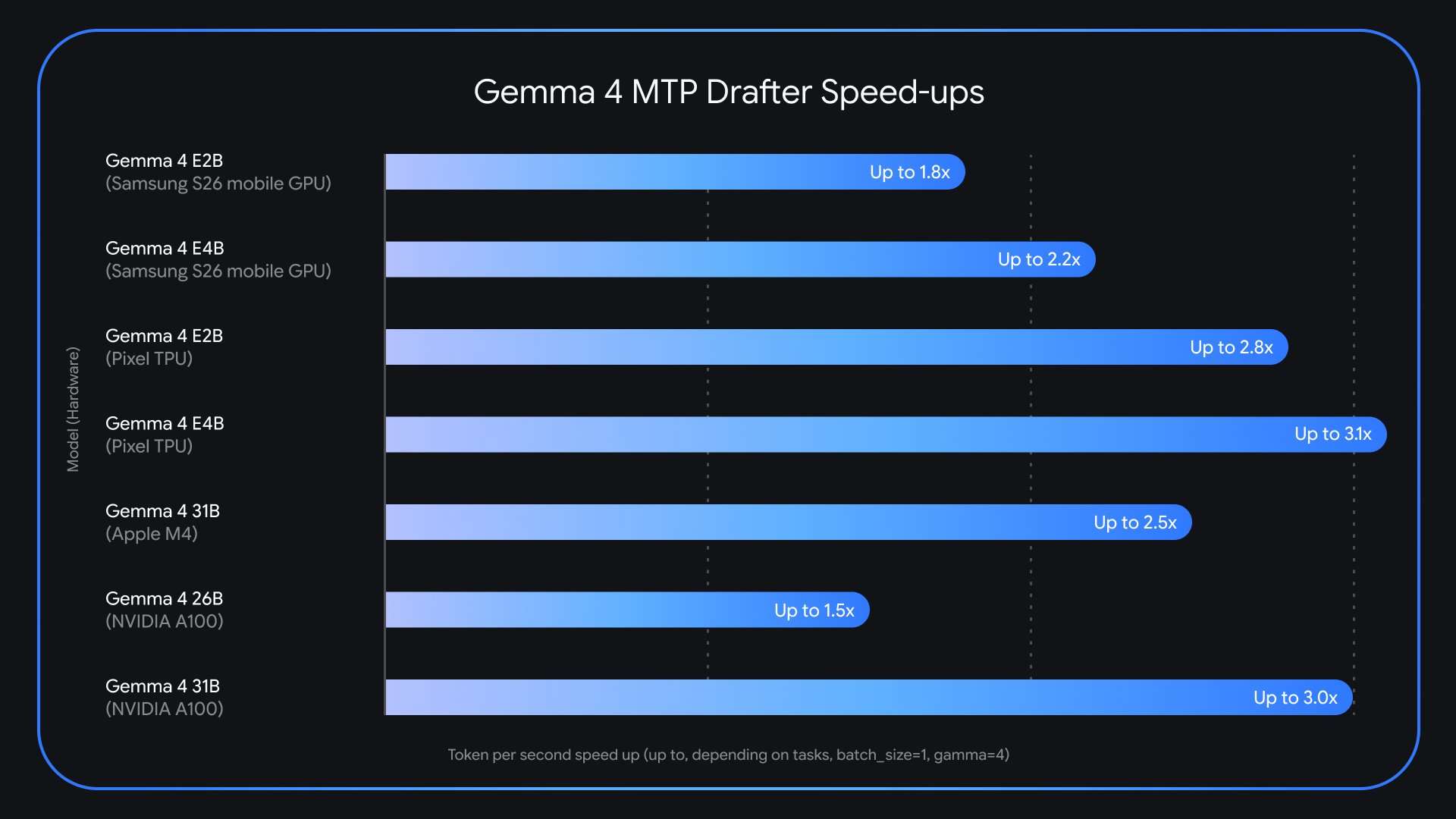
Google AI Releases Multi-Token Prediction (MTP) Drafters for Gemma 4: Delivering Up to 3x Faster Inference Without Quality Loss
MarkTechPost
When Claude Hallucinates in Court: The Latham & Watkins Incident and What It Means for Attorney Liability
MarkTechPost
Solidity LM surpasses Opus
Reddit r/LocalLLaMA


