
Query-Efficient Quantum Approximate Optimization via Graph-Conditioned Trust Regions
arXiv cs.LG / 4/29/2026
📰 NewsSignals & Early TrendsIdeas & Deep AnalysisModels & Research
Key Points
- The paper presents a graph-conditioned trust-region method to reduce the dominant query (objective evaluation) cost in low-depth QAOA implementations rather than focusing on circuit depth.
- A graph neural network outputs a Gaussian distribution over QAOA angles, using the mean to initialize local optimization and the covariance to define an ellipsoidal trust region that limits the search.
- The model’s predicted uncertainty sets an instance-dependent evaluation budget, effectively creating a learned search policy instead of providing only an initial parameter guess.
- Under stated assumptions (smoothness, curvature, calibration, and noise), the authors derive theoretical guarantees including bounds on objective degradation, lower bounds on gradient variance, ordering preservation under depolarizing noise, and finite-sample coverage.
- Experiments on MaxCut with QAOA depth p=2 across several random graph families show a large reduction in mean circuit evaluations (from 343/85 down to about 45±7) while keeping approximation quality within ~3 percentage points of strong heuristics.
Related Articles
LLMs will be a commodity
Reddit r/artificial
Indian Developers: How to Build AI Side Income with $0 Capital in 2026
Dev.to
HubSpot Just Legitimized AEO: What It Means for Your Brand AI Visibility
Dev.to

What it feels like to have to have Qwen 3.6 or Gemma 4 running locally
Reddit r/LocalLLaMA
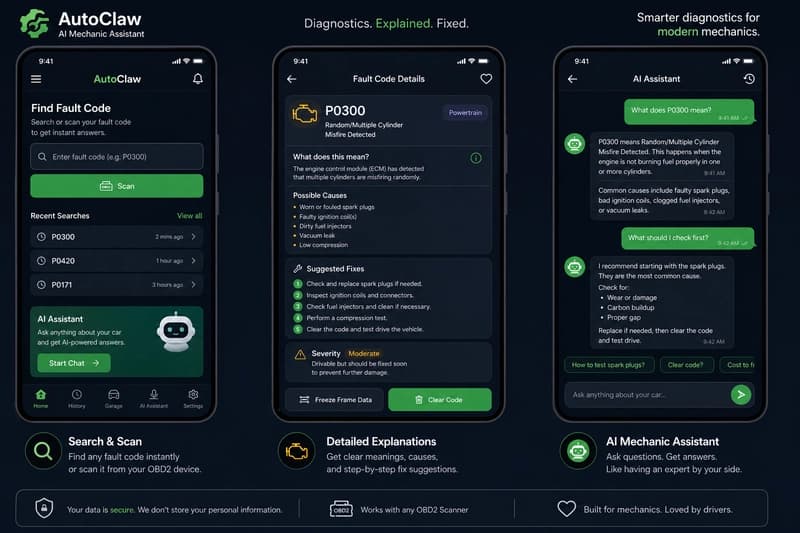
From Fault Codes to Smart Fixes: How Google Cloud NEXT ’26 Inspired My AI Mechanic Assistant
Dev.to


