
Planetary Exploration 3.0: A Roadmap for Software-Defined, Radically Adaptive Space Systems
arXiv cs.RO / 4/24/2026
💬 OpinionDeveloper Stack & InfrastructureIdeas & Deep AnalysisModels & Research
Key Points
- The paper argues that traditional “incremental” planetary mission planning (PE 2.0) is impractical for the outer Solar System because long cruise times prevent iterative upgrades between missions.
- It proposes “Planetary Exploration 3.0 (PE 3.0),” where one (or a few) missions explore unvisited worlds while evolving through follow-on, hypothesis-driven science enabled by data the spacecraft returns in situ.
- The core enabler is software-defined space systems (SDSSs) that can adapt functionality across multiple levels via software updates to remain resilient in previously unseen environments.
- The work summarizes a KISS workshop and covers PE 3.0 systems engineering, SDSS technologies such as reconfigurable and modular hardware, onboard intelligence (autonomous science and navigation), and embodied AI.
- Three mission concepts are presented, including a Neptune/Triton smart flyby, an ocean-world explorer, and an Oort cloud reconnaissance mission.
Related Articles

The 67th Attempt: When Your "Knowledge Management" System Becomes a Self-Fulfilling Prophecy of Excellence
Dev.to
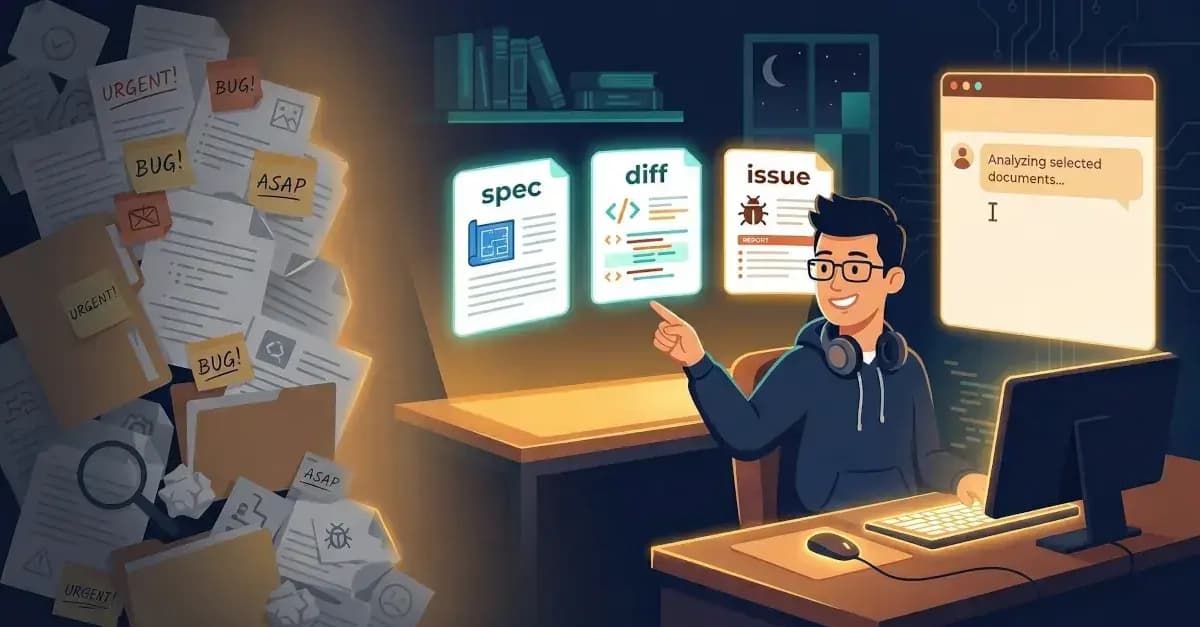
Context Engineering for Developers: A Practical Guide (2026)
Dev.to
GPT-5.5 is here. So is DeepSeek V4. And honestly, I am tired of version numbers.
Dev.to
I Built an AI Image Workflow with GPT Image 2.0 (+ Fixing Its Biggest Flaw)
Dev.to
Max-and-Omnis/Nemotron-3-Super-64B-A12B-Math-REAP-GGUF
Reddit r/LocalLLaMA


