
Bounded Coupled AI Learning Dynamics in Tri-Hierarchical Drone Swarms
arXiv cs.LG / 3/24/2026
💬 OpinionIdeas & Deep AnalysisModels & Research
Key Points
- The paper addresses whether heterogeneous learning mechanisms in tri-hierarchical drone swarms can be formally guaranteed to remain within an admissible operational regime as they run at different timescales.
- It models three coupled learning layers simultaneously: fast Hebbian online learning at the agent level, medium-timescale MARL for group coordination, and slow-timescale MAML for strategic adaptation.
- It proves multiple formal guarantees, including a bounded total error result that limits long-run suboptimality under constraints on learning rates, Lipschitz inter-level mappings, and weight stabilization.
- It provides worst-case bounds on how Hebbian updates can perturb coordination-level representations across MARL cycles and shows that meta-level adaptation can preserve lower-level invariants.
- A non-accumulation theorem further establishes that coupled error does not grow unbounded over time, supporting stability arguments for the overall system.
Related Articles
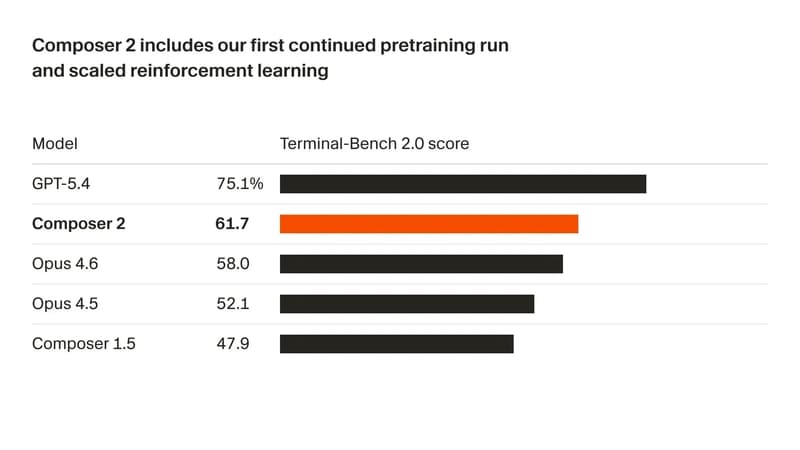
Composer 2: What is new and Compares with Claude Opus 4.6 & GPT-5.4
Dev.to
How UCP Breaks Your E-Commerce Tracking Stack: A Platform-by-Platform Analysis
Dev.to
AI Text Analyzer vs Asking Friends: Which Gives Better Perspective?
Dev.to
[D] Cathie wood claims ai productivity wave is starting, data shows 43% of ceos save 8+ hours weekly
Reddit r/MachineLearning

Microsoft hires top AI researchers from Allen Institute for AI for Suleyman's Superintelligence team
THE DECODER


