
Agentic AI and Occupational Displacement: A Multi-Regional Task Exposure Analysis of Emerging Labor Market Disruption
arXiv cs.AI / 4/2/2026
💬 OpinionSignals & Early TrendsIdeas & Deep AnalysisModels & Research
Key Points
- The paper analyzes how agentic AI—autonomous systems that complete entire occupational workflows—could increase labor-market displacement risk beyond prior task-level automation frameworks.
- It introduces an Agentic Task Exposure (ATE) score derived algorithmically from O*NET task data using calibrated adoption parameters (AI capability, workflow coverage, and adoption velocity) rather than a regression approach.
- Across five major US tech regions, the study projects that by 2030, 93.2% of 236 analyzed information-intensive occupations would cross a moderate-risk threshold (ATE >= 0.35), with roles like credit analysts and judges estimated at ATE scores of roughly 0.43–0.47.
- The analysis also identifies 17 emerging occupation categories likely to benefit from “reinstatement effects,” particularly in human-AI collaboration, AI governance, and domain-specific AI operations.
- The authors argue the results should inform workforce transition policy and regional economic planning by accounting for the timing and dynamics of labor-market adjustment.
Related Articles

Black Hat Asia
AI Business
v5.5.0
Transformers(HuggingFace)Releases
Bonsai (PrismML's 1 bit version of Qwen3 8B 4B 1.7B) was not an aprils fools joke
Reddit r/LocalLLaMA

Big Tech firms are accelerating AI investments and integration, while regulators and companies focus on safety and responsible adoption.
Dev.to
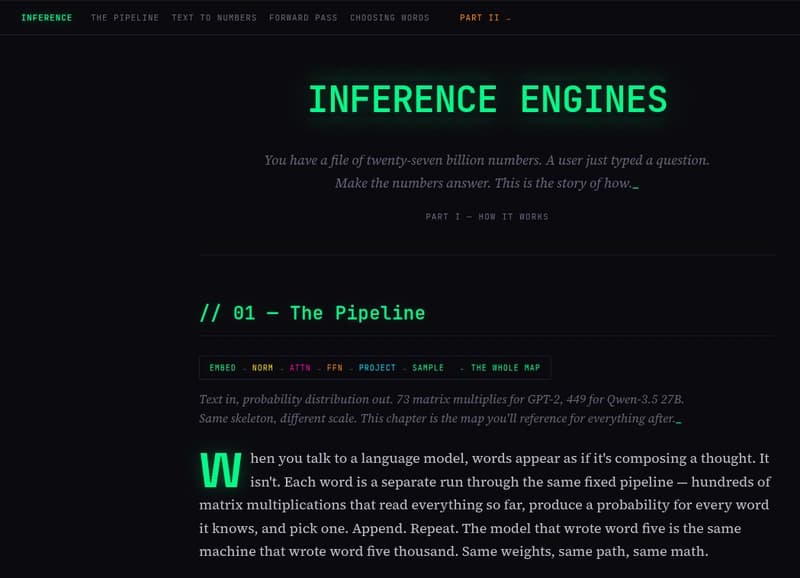
Inference Engines - A visual deep dive into the layers of an LLM
Dev.to


