
Frequency-Modulated Visual Restoration for Matryoshka Large Multimodal Models
arXiv cs.CL / 3/13/2026
💬 OpinionIdeas & Deep AnalysisModels & Research
Key Points
- FMVR introduces a plug-and-play visual restoration strategy that preserves semantic information in LMMs when visual token budgets are reduced.
- It disentangles visual representations into high- and low-frequency components using AvgPool and MaxPool, which are then modulated by lightweight learnable parameters.
- The high-frequency component from AvgPool acts as a saliency filter to enhance salient visual semantics, while the low-frequency component from MaxPool serves as an anti-saliency filter to strengthen weaker semantics.
- Integrated with Matryoshka Representation Learning, FMVR enables elastic adjustment of visual tokens during inference and achieves substantial FLOPs reductions (up to 89% on LLaVA-1.5-7B) with nearly full accuracy, with code to be released.
Related Articles
Day 10: 230 Sessions of Hustle and It Comes Down to One Person Reading a Document
Dev.to

5 Dangerous Lies Behind Viral AI Coding Demos That Break in Production
Dev.to
Two bots, one confused server: what Nimbus revealed about AI agent identity
Dev.to
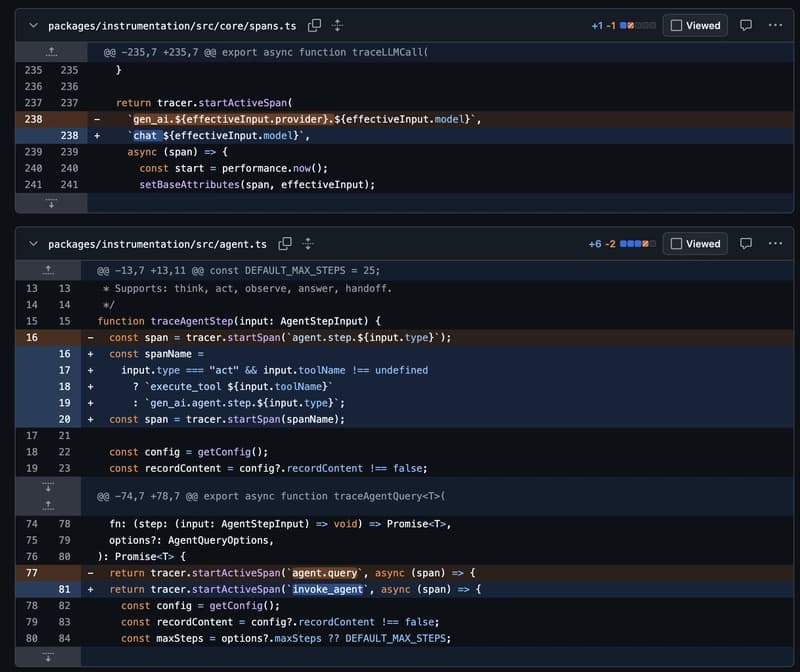
OpenTelemetry just standardized LLM tracing. Here's what it actually looks like in code.
Dev.to
PIXIU: A Large Language Model, Instruction Data and Evaluation Benchmark forFinance
Dev.to


