
Exploring Pass-Rate Reward in Reinforcement Learning for Code Generation
arXiv cs.LG / 5/6/2026
📰 NewsIdeas & Deep AnalysisModels & Research
Key Points
- The paper studies using pass-rate (test-case completion rate) as a surrogate reward in critic-free reinforcement learning for code generation, where binary “pass all tests” rewards are too sparse.
- Across multiple base models and critic-free RL algorithms (e.g., GRPO and RLOO), the authors find that pass-rate rewards do not consistently improve final code-generation performance compared with binary rewards in controlled experiments.
- Although pass-rate rewards are denser and provide more frequent learning signals, the resulting gradient updates often fail to shift probability mass toward fully correct solutions.
- The study attributes this to pass-rate being a miscalibrated proxy for full correctness, where partially passing solutions within the same group can create conflicting gradient directions that cancel out.
- The findings suggest that, in critic-free RL, pass-rate rewards alone are insufficient, and that future reward designs should better align optimization objectives with full correctness.
Related Articles

Top 10 Free AI Tools for Students in 2026: The Ultimate Study Guide
Dev.to
AI as Your Contingency Co-Pilot: Automating Wedding Day 'What-Ifs'
Dev.to
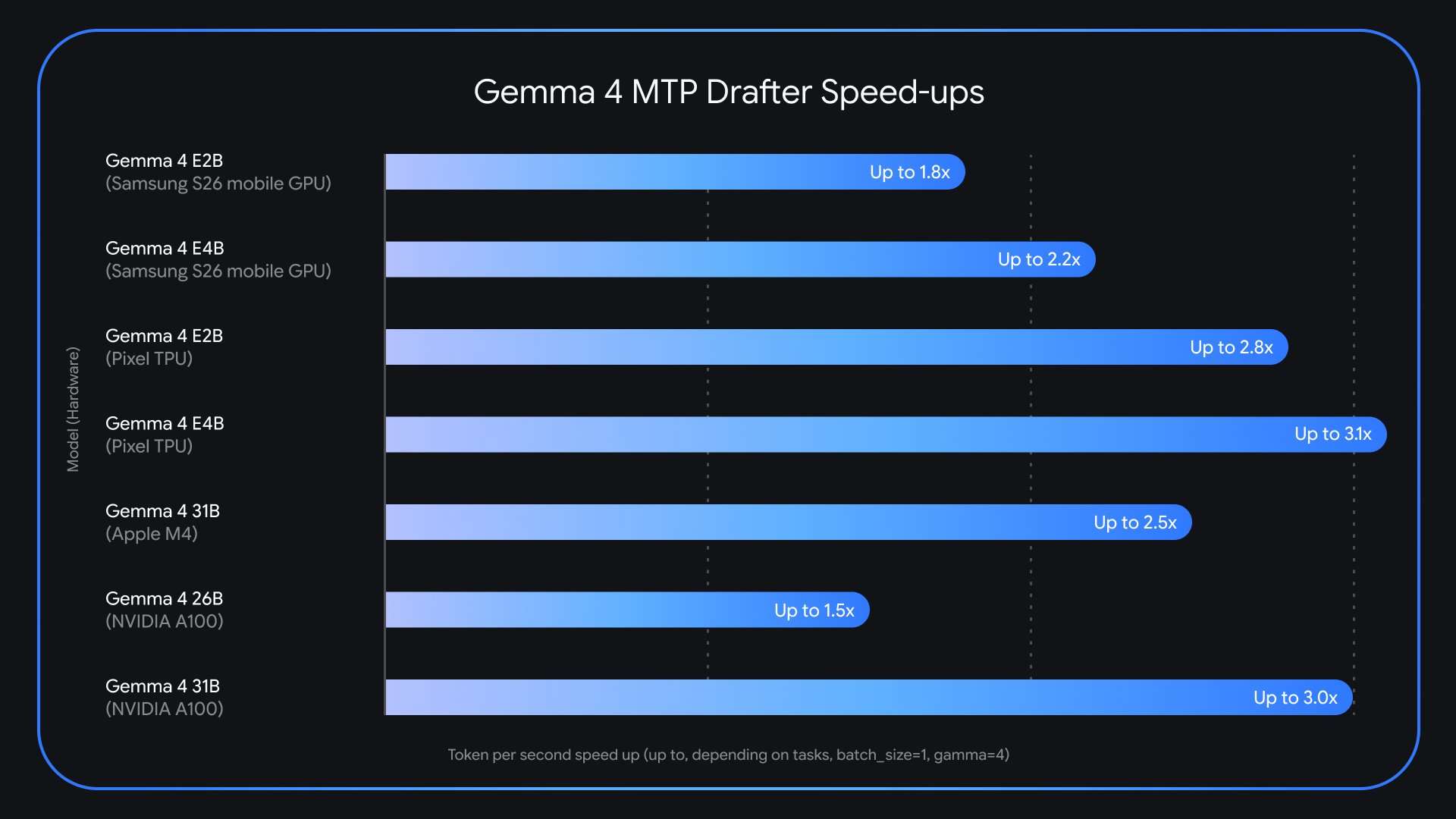
Google AI Releases Multi-Token Prediction (MTP) Drafters for Gemma 4: Delivering Up to 3x Faster Inference Without Quality Loss
MarkTechPost
When Claude Hallucinates in Court: The Latham & Watkins Incident and What It Means for Attorney Liability
MarkTechPost
Solidity LM surpasses Opus
Reddit r/LocalLLaMA


