
Healthcare AI GYM for Medical Agents
arXiv cs.LG / 5/6/2026
📰 NewsDeveloper Stack & InfrastructureModels & Research
Key Points
- The paper introduces a unified, Gymnasium-compatible RL training environment for medical AI agents, covering 10 clinical domains, 3.6K+ tasks, 135 clinical tools, and an 828K-passage knowledge base.
- It finds that naïve multi-turn agentic RL can collapse into overly long, verbose single-turn “monologues,” marked by monotonic response-length growth and reduced tool usage.
- The authors attribute the collapse and related distillation instability to misalignment between sparse terminal rewards and the sequential nature of clinical trajectories.
- While vanilla GRPO can reach strong benchmark accuracy in some cases, it shows training instability, including oscillations in response length and long convergence times.
- To address these issues, the authors propose Turn-level Truncated On-Policy Distillation (TT-OPD), which uses an EMA teacher with outcome-privileged information to add dense, turn-by-turn KL regularization, improving results on 10/18 benchmarks by an average +3.9 percentage points and improving convergence speed and multi-turn tool use.
Related Articles

SIFS (SIFS Is Fast Search) - local code search for coding agents
Dev.to
BizNode's semantic memory (Qdrant) makes your bot smarter over time — it remembers past conversations and answers...
Dev.to
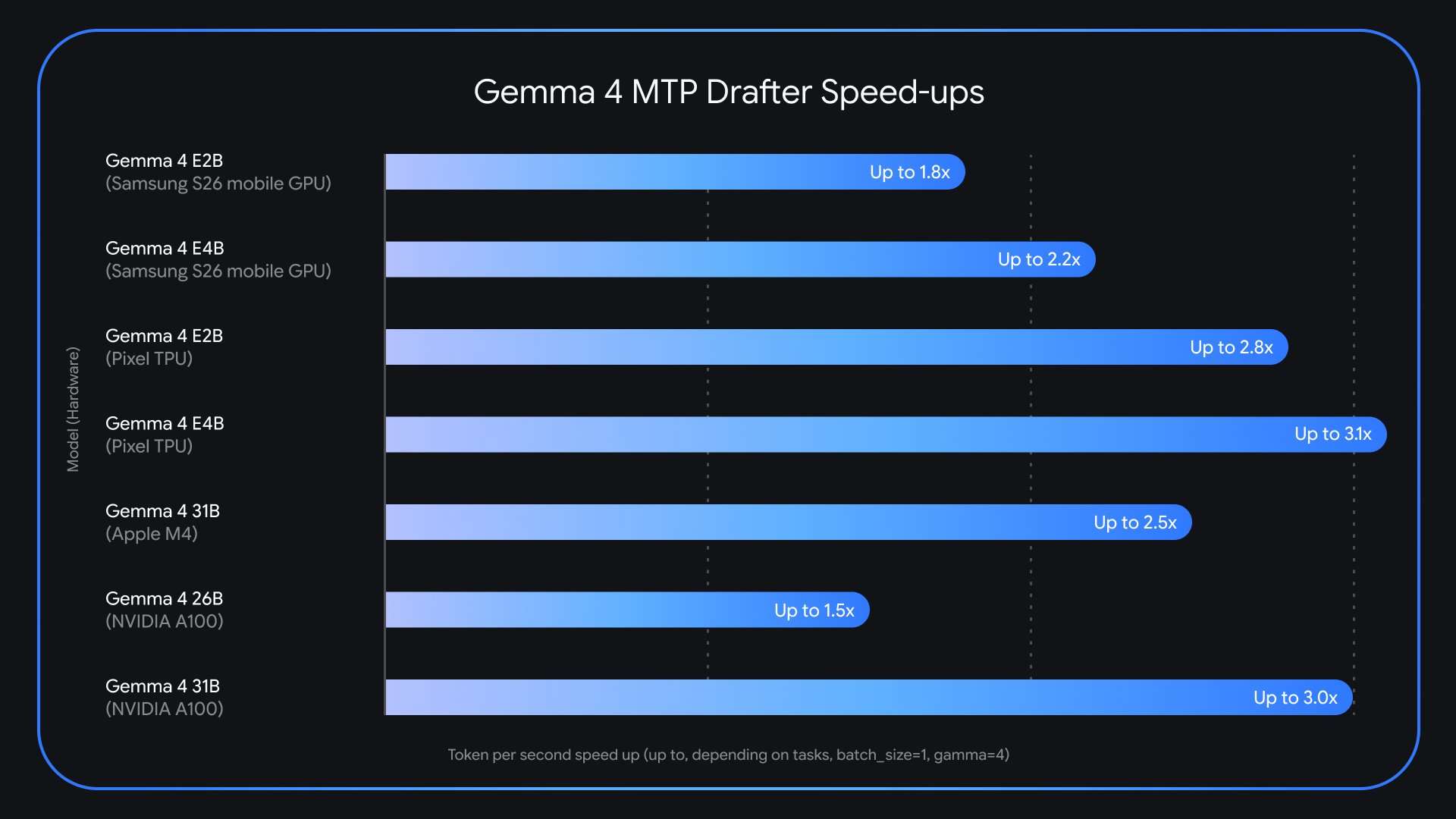
Google AI Releases Multi-Token Prediction (MTP) Drafters for Gemma 4: Delivering Up to 3x Faster Inference Without Quality Loss
MarkTechPost
Solidity LM surpasses Opus
Reddit r/LocalLLaMA

Quality comparison between Qwen 3.6 27B quantizations (BF16, Q8_0, Q6_K, Q5_K_XL, Q4_K_XL, IQ4_XS, IQ3_XXS,...)
Reddit r/LocalLLaMA


