
Right-to-Act: A Pre-Execution Non-Compensatory Decision Protocol for AI Systems
arXiv cs.AI / 4/28/2026
📰 NewsIdeas & Deep AnalysisModels & Research
Key Points
- The paper proposes the “Right-to-Act” protocol, a deterministic pre-execution decision layer for AI systems that decide whether an AI output is allowed to be carried out in the real world.
- It distinguishes non-compensatory regimes from compensatory ones by enforcing strict structural constraints: if any required condition is not met, execution is halted or deferred rather than overridden by high-confidence signals.
- The authors formalize a pre-execution legitimacy boundary and show, via scenario-based case studies, that the same AI output can produce different outcomes depending on whether the protocol permits execution.
- The approach reframes AI control away from optimizing decisions and toward governing whether decisions are admissible, aiming to preserve reversibility and prevent premature or irreversible actions regardless of model architecture or training methods.
Related Articles

Big Tech firms are accelerating AI investments and integration, while regulators and companies focus on safety and responsible adoption.
Dev.to
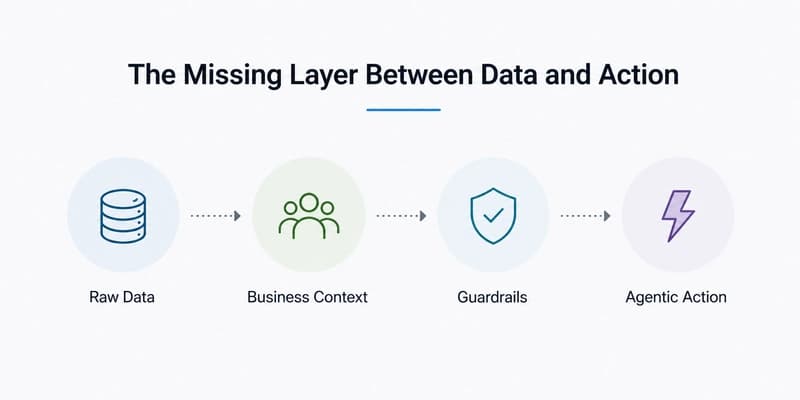
Everyone Wants AI Agents. Fewer Teams Are Ready for the Messy Business Context Behind Them
Dev.to
AI 编程工具对比 2026:Claude Code vs Cursor vs Gemini CLI vs Codex
Dev.to

How I Improved My YouTube Shorts and Podcast Audio Workflow with AI Tools
Dev.to

An improvement of the convergence proof of the ADAM-Optimizer
Dev.to


