
Fine-tuning Factor Augmented Neural Lasso for Heterogeneous Environments
arXiv stat.ML / 4/15/2026
💬 OpinionSignals & Early TrendsIdeas & Deep AnalysisModels & Research
Key Points
- The paper proposes FAN-Lasso, a transfer learning framework that fine-tunes pre-learned components for high-dimensional nonparametric regression with variable selection under both covariate and posterior shifts.
- It introduces a low-rank factor structure to handle dependent high-dimensional covariates and a residual fine-tuning decomposition that represents the target function as a transformation of a frozen source function plus additional terms.
- The authors derive minimax-optimal excess risk bounds to identify when fine-tuning provides statistical acceleration over single-task learning, based on relative sample sizes and function complexity measures.
- The framework is positioned as a theoretical lens on parameter-efficient fine-tuning methods, connecting the proposed approach to broader fine-tuning efficiency perspectives.
- Extensive experiments across multiple shift scenarios show FAN-Lasso outperforming standard baselines and achieving near-oracle performance, including when target-domain sample sizes are severely limited.
Related Articles

Black Hat Asia
AI Business

The Complete Guide to Better Meeting Productivity with AI Note-Taking
Dev.to

5 Ways Real-Time AI Can Boost Your Sales Call Performance
Dev.to
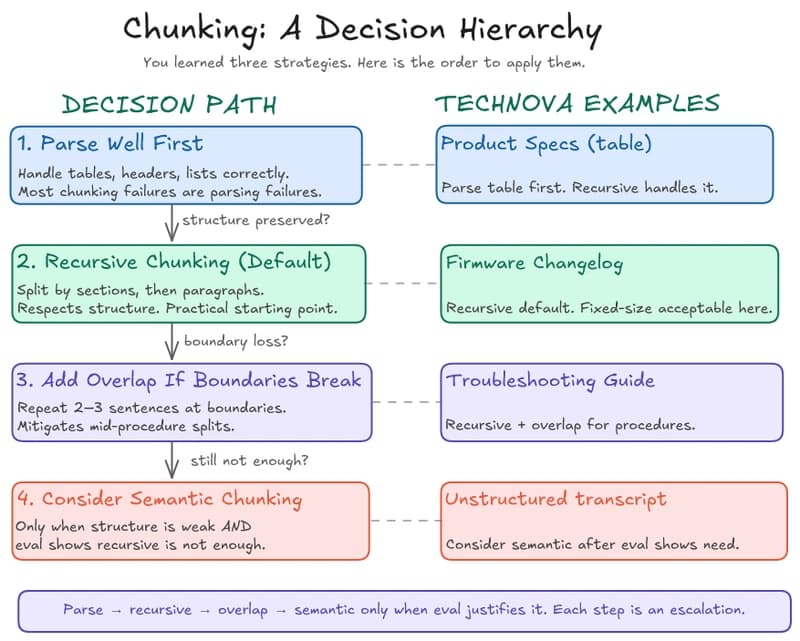
RAG in Practice — Part 4: Chunking, Retrieval, and the Decisions That Break RAG
Dev.to
Why dynamically routing multi-timescale advantages in PPO causes policy collapse (and a simple decoupled fix) [R]
Reddit r/MachineLearning


