
Uncertainty-Aware Variational Reward Factorization via Probabilistic Preference Bases for LLM Personalization
arXiv cs.CL / 4/3/2026
💬 OpinionIdeas & Deep AnalysisModels & Research
Key Points
- The paper proposes Variational Reward Factorization (VRF) to improve LLM reward-factorization personalization by modeling user preferences probabilistically rather than as deterministic weights estimated from limited data.
- VRF learns user-specific variational distributions in a shared preference space using a variational encoder, then matches them to shared probabilistic basis functions via Wasserstein distance to obtain more reliable weights.
- It reduces the impact of uncertain user inferences through a variance-attenuated loss, aiming to make personalization robust when user data is scarce or noisy.
- Experiments on three benchmarks show VRF outperforming prior methods for both seen and unseen users, across few-shot settings and different uncertainty levels, with improvements carrying over to downstream alignment tasks.
Related Articles

90000 Tech Workers Got Fired This Year and Everyone Is Blaming AI but Thats Not the Whole Story
Dev.to

Microsoft’s $10 Billion Japan Bet Shows the Next AI Battleground Is National Infrastructure
Dev.to
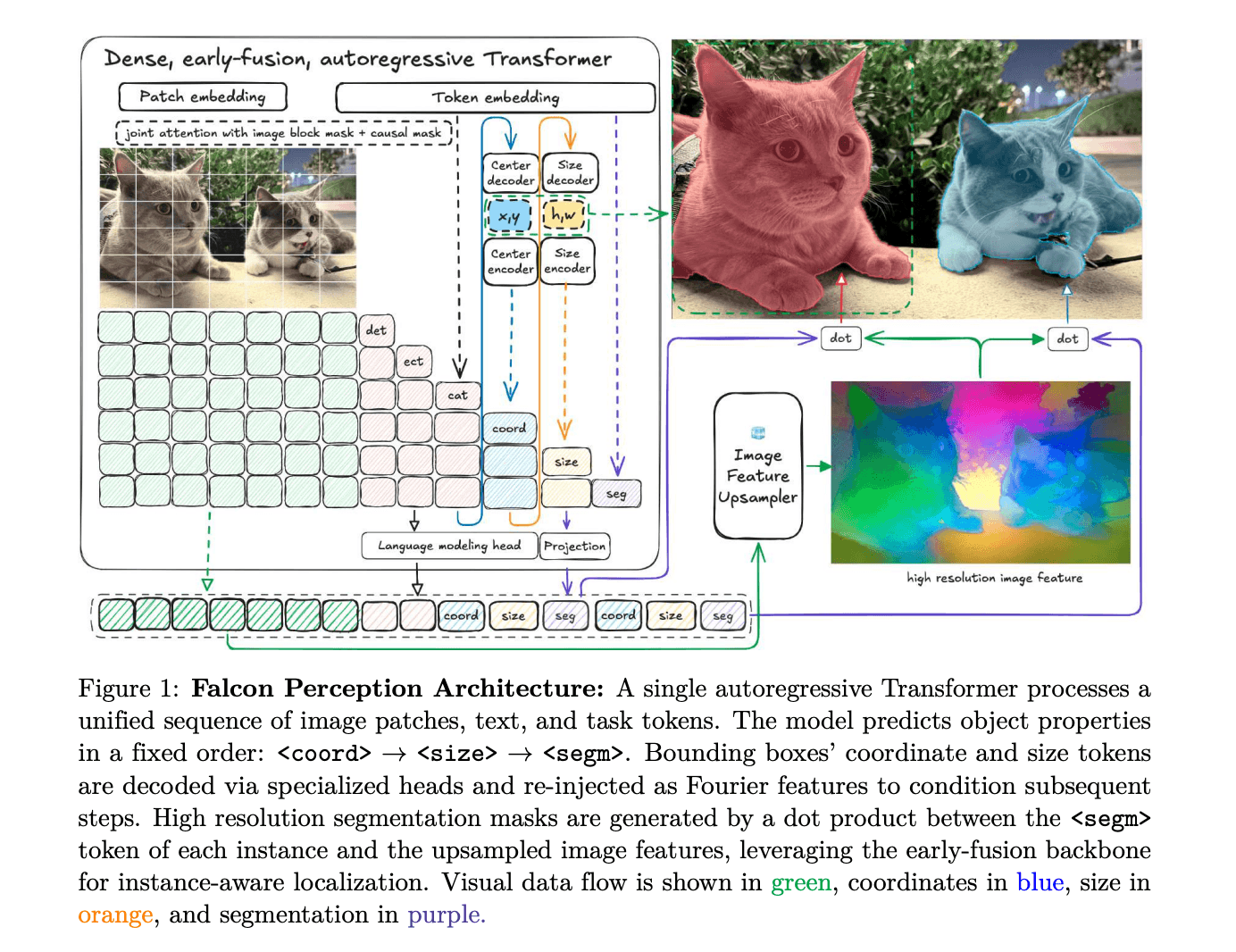
TII Releases Falcon Perception: A 0.6B-Parameter Early-Fusion Transformer for Open-Vocabulary Grounding and Segmentation from Natural Language Prompts
MarkTechPost

The house asked me a question
Dev.to

Precision Clip Selection: How AI Suggests Your In and Out Points
Dev.to


