
Spatial Atlas: Compute-Grounded Reasoning for Spatial-Aware Research Agent Benchmarks
arXiv cs.AI / 4/15/2026
📰 NewsDeveloper Stack & InfrastructureSignals & Early TrendsIdeas & Deep AnalysisModels & Research
Key Points
- The paper introduces compute-grounded reasoning (CGR), a paradigm for spatial-aware research agents that resolves each sub-problem via deterministic computation before an LLM generates the final response.
- Spatial Atlas implements CGR using a single Agent-to-Agent (A2A) server that supports two benchmarks: FieldWorkArena for multimodal spatial QA and MLE-Bench covering 75 Kaggle ML competitions requiring end-to-end engineering.
- A structured spatial scene-graph engine extracts entities and relations from vision descriptions, deterministically computes distances and safety violations, and passes these computed facts to LLMs to reduce hallucinated spatial reasoning.
- The system uses entropy-guided action selection for efficient information gain and routes queries across a three-tier frontier model stack (OpenAI + Anthropic).
- It also includes a self-healing ML pipeline with strategy-aware code generation, an iterative refinement loop guided by scoring, and a prompt-based “leak audit” registry for reliability and interpretability.
Related Articles

Black Hat Asia
AI Business

The Complete Guide to Better Meeting Productivity with AI Note-Taking
Dev.to

5 Ways Real-Time AI Can Boost Your Sales Call Performance
Dev.to
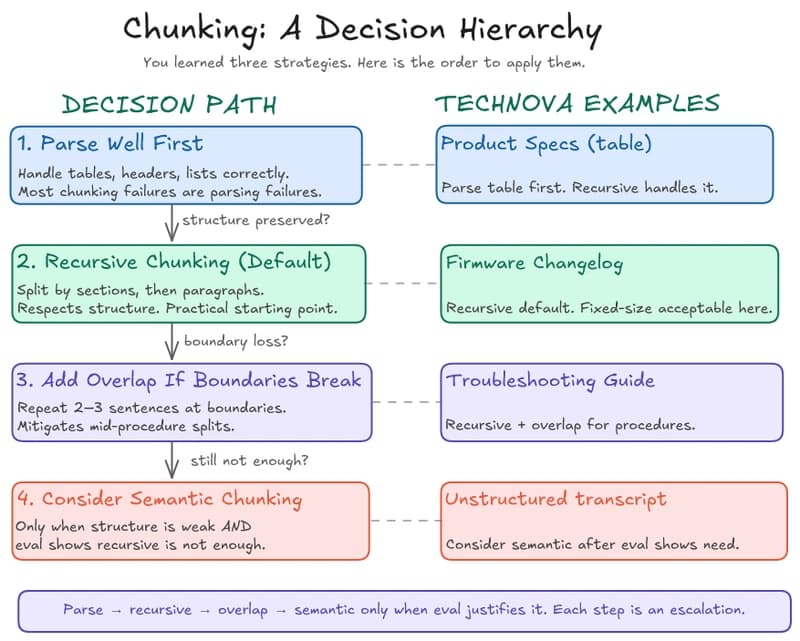
RAG in Practice — Part 4: Chunking, Retrieval, and the Decisions That Break RAG
Dev.to
Why dynamically routing multi-timescale advantages in PPO causes policy collapse (and a simple decoupled fix) [R]
Reddit r/MachineLearning


