
DynaVid: Learning to Generate Highly Dynamic Videos using Synthetic Motion Data
arXiv cs.CV / 4/3/2026
💬 OpinionIdeas & Deep AnalysisModels & Research
Key Points
- DynaVid is introduced as a video synthesis framework targeting diffusion-based models’ difficulty with highly dynamic motion and fine-grained motion controllability.
- The method addresses limited real training data by generating synthetic motion supervision using optical flow derived from computer-graphics pipelines, providing diverse motion patterns and precise control signals.
- By training with motion represented as optical flow (decoupled from appearance), DynaVid aims to avoid the unnatural visual artifacts that can come from rendered synthetic videos.
- The approach uses a two-stage pipeline—first synthesizing motion with a motion generator, then producing motion-guided video frames conditioned on that motion—to improve both controllability and realism.
- Experiments on scenarios like vigorous human motion and extreme camera motion show improved realism and controllability compared with existing approaches, particularly where datasets are scarce.
Related Articles

90000 Tech Workers Got Fired This Year and Everyone Is Blaming AI but Thats Not the Whole Story
Dev.to

Microsoft’s $10 Billion Japan Bet Shows the Next AI Battleground Is National Infrastructure
Dev.to
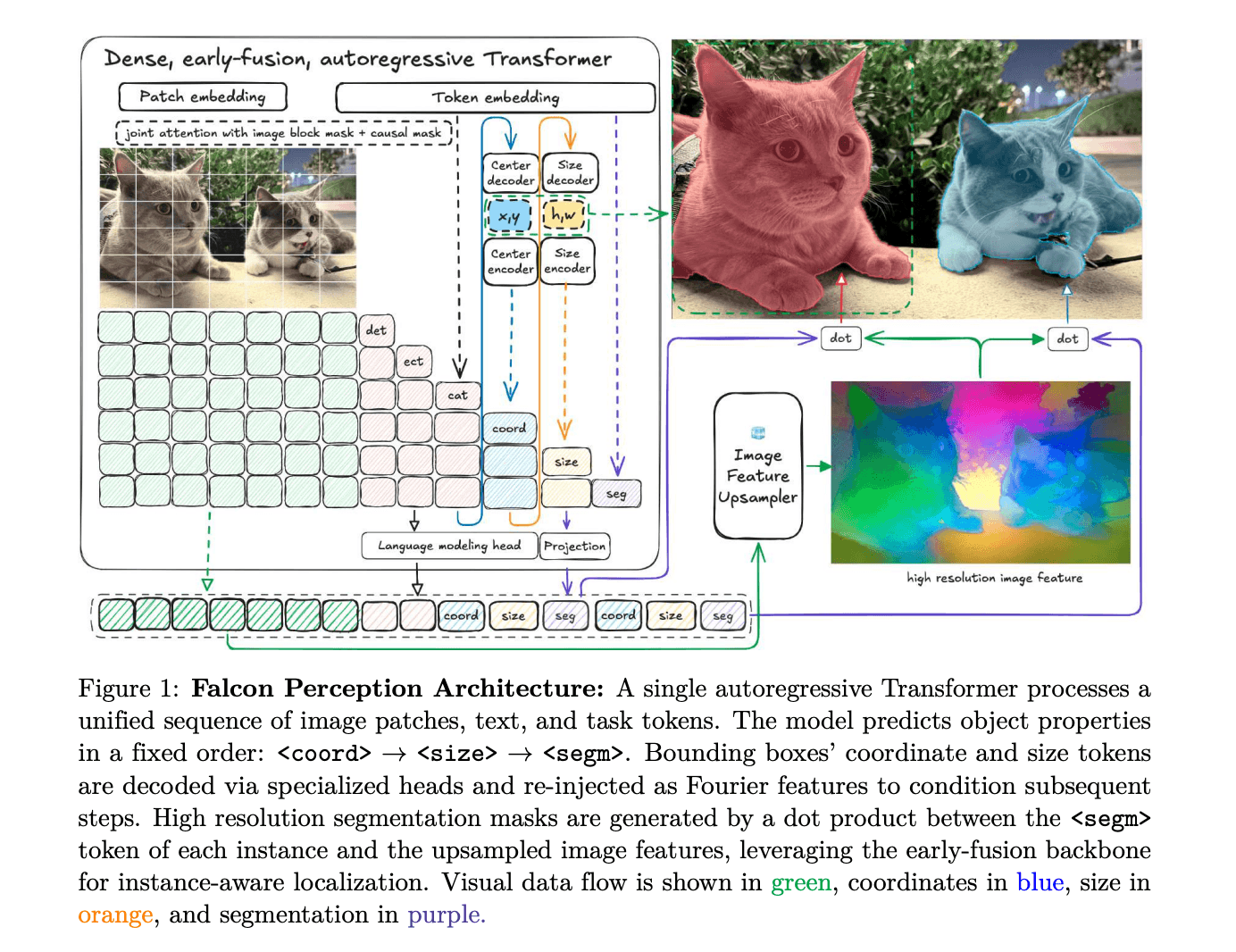
TII Releases Falcon Perception: A 0.6B-Parameter Early-Fusion Transformer for Open-Vocabulary Grounding and Segmentation from Natural Language Prompts
MarkTechPost

The house asked me a question
Dev.to

Precision Clip Selection: How AI Suggests Your In and Out Points
Dev.to


