
S0 Tuning: Zero-Overhead Adaptation of Hybrid Recurrent-Attention Models
arXiv cs.CL / 4/3/2026
📰 NewsSignals & Early TrendsIdeas & Deep AnalysisModels & Research
Key Points
- The arXiv paper introduces “S0 tuning,” a parameter-efficient fine-tuning method that optimizes a single state-matrix per recurrent layer while freezing all original model weights and adding zero inference overhead.
- Using only about 48 execution-verified HumanEval training solutions, S0 tuning outperforms LoRA by +10.8 percentage points on HumanEval, and achieves larger gains on specific hybrid models such as Qwen3.5-4B and FalconH1-7B.
- For hybrid recurrent-attention models, S0 tuning improves greedy pass@1 on Qwen3.5-4B by +23.6±1.7 pp and reaches 71.8%±1.3 on FalconH1-7B, with results that are statistically indistinguishable from LoRA at the reported sample sizes.
- The method shows meaningful cross-domain transfer on MATH-500 (+4.8 pp) and GSM8K (+2.8 pp) but not on Spider text-to-SQL, aligning with an explanation that it steers the model trajectory rather than learning transferable syntax/semantics.
- A control experiment indicates that similar prefix-tuning on a pure Transformer degrades performance, while a per-step state-offset variant can do better but at the cost of per-step inference overhead; the tuned state is ~48 MB and task switching does not require weight merging or model reload.
Related Articles

Black Hat Asia
AI Business

90000 Tech Workers Got Fired This Year and Everyone Is Blaming AI but Thats Not the Whole Story
Dev.to

Microsoft’s $10 Billion Japan Bet Shows the Next AI Battleground Is National Infrastructure
Dev.to
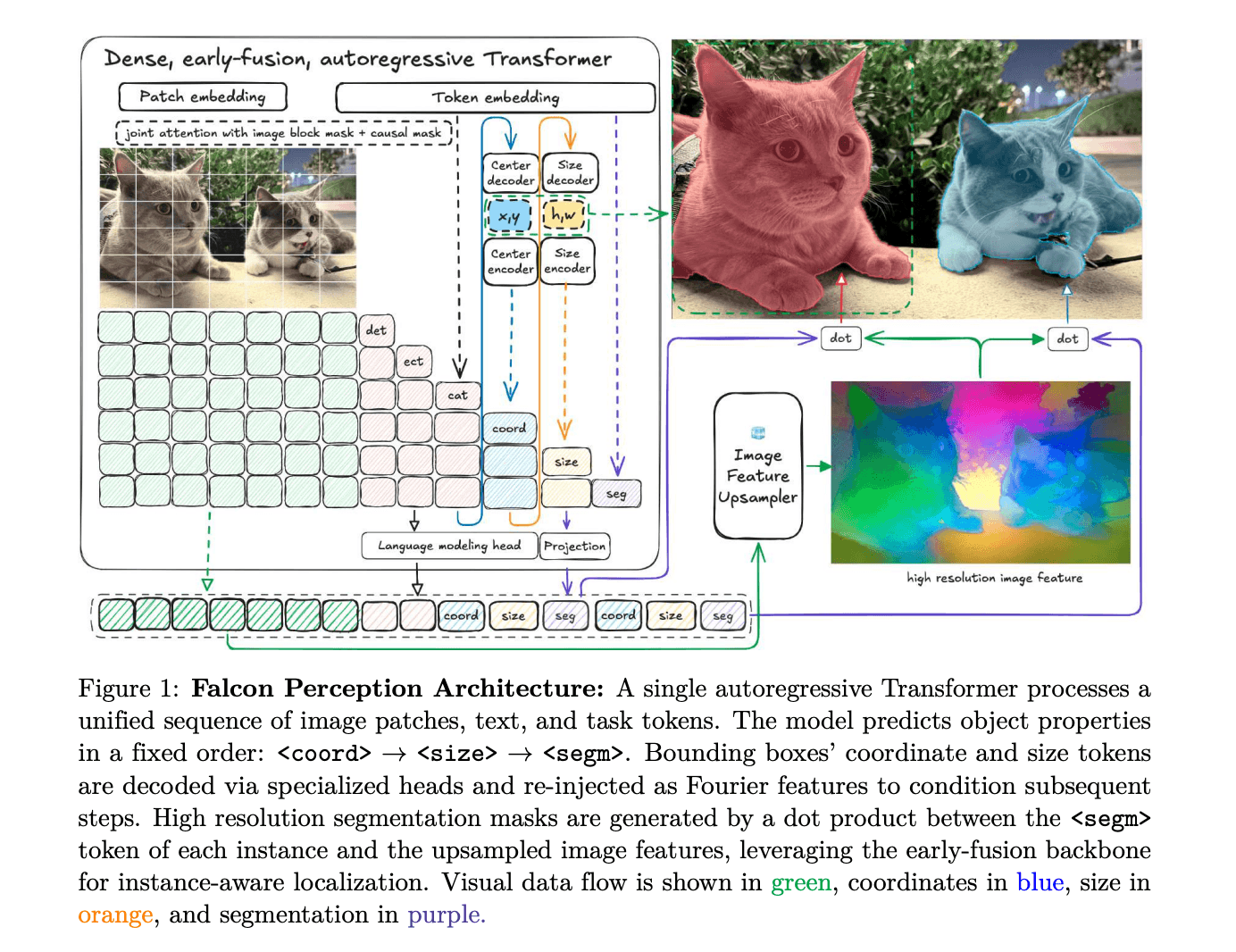
TII Releases Falcon Perception: A 0.6B-Parameter Early-Fusion Transformer for Open-Vocabulary Grounding and Segmentation from Natural Language Prompts
MarkTechPost

Portable eye scanner powered by AI expands access to low-cost community screening
Reddit r/artificial


