
Token-Level Policy Optimization: Linking Group-Level Rewards to Token-Level Aggregation via Sequence-Level Likelihood
arXiv cs.CL / 4/15/2026
💬 OpinionIdeas & Deep AnalysisModels & Research
Key Points
- The paper introduces TEPO (Token-Level Policy Optimization) to improve Group Relative Policy Optimization (GRPO) for LLMs under token-level sparse-reward settings common in chain-of-thought mathematical reasoning.
- TEPO links group-level rewards to token-level learning by aggregating token updates using sequence-level likelihood, addressing how sparse token rewards are assigned during training.
- It adds a token-level KL-divergence mask constraint that applies to tokens with positive advantages and decreasing entropy, aiming to prevent abrupt policy updates that can cause entropy collapse or degradation.
- Experiments report state-of-the-art results on mathematical reasoning benchmarks and improved training stability, including a claimed 50% reduction in convergence time versus GRPO/DAPO.
Related Articles
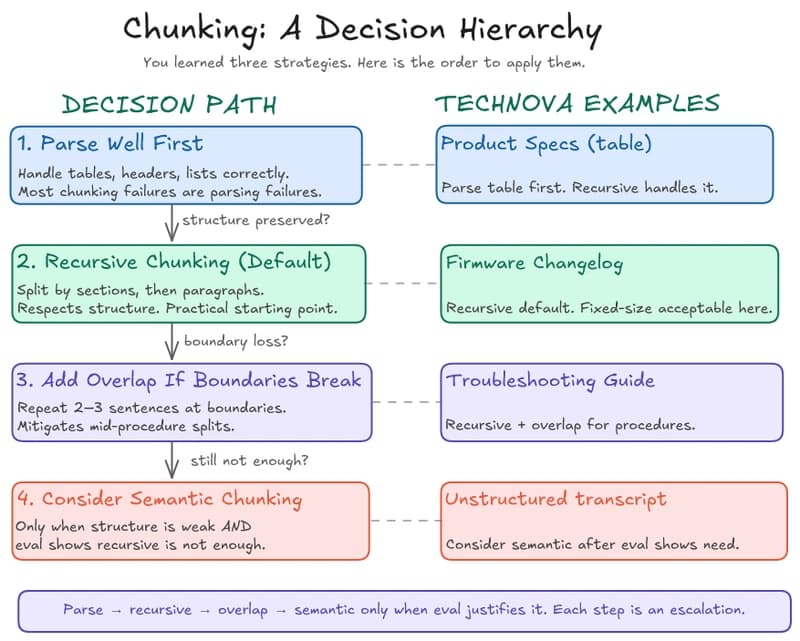
RAG in Practice — Part 4: Chunking, Retrieval, and the Decisions That Break RAG
Dev.to
Why dynamically routing multi-timescale advantages in PPO causes policy collapse (and a simple decoupled fix) [R]
Reddit r/MachineLearning

How AI Interview Assistants Are Changing Job Preparation in 2026
Dev.to

Consciousness in Artificial Intelligence: Insights from the Science ofConsciousness
Dev.to

NEW PROMPT INJECTION
Dev.to


