
Fatigue-Aware Learning to Defer via Constrained Optimisation
arXiv cs.LG / 4/2/2026
📰 NewsSignals & Early TrendsIdeas & Deep AnalysisModels & Research
Key Points
- The paper introduces FALCON, a fatigue-aware learning-to-defer (L2D) method that accounts for workload-dependent human performance degradation rather than assuming static expert accuracy.
- FALCON formulates L2D as a constrained Markov decision process (CMDP) with a state that includes task features plus cumulative human workload, then optimizes accuracy subject to cooperation/coverage budgets using PPO-Lagrangian training.
- The authors propose FA-L2D, a benchmark that varies fatigue dynamics from near-static to rapidly degrading regimes to test robustness under different human fatigue patterns.
- Experiments on multiple datasets indicate FALCON improves over existing L2D approaches across different coverage levels, generalizes zero-shot to unseen experts with different fatigue behaviors, and shows adaptive human-AI collaboration beats AI-only or human-only when coverage is between 0 and 1.
Related Articles

Black Hat Asia
AI Business
v5.5.0
Transformers(HuggingFace)Releases
Bonsai (PrismML's 1 bit version of Qwen3 8B 4B 1.7B) was not an aprils fools joke
Reddit r/LocalLLaMA

Big Tech firms are accelerating AI investments and integration, while regulators and companies focus on safety and responsible adoption.
Dev.to
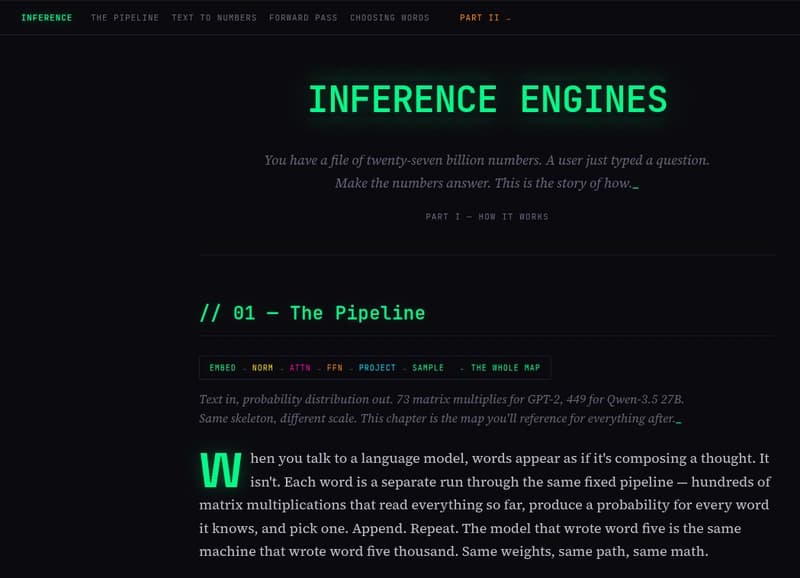
Inference Engines - A visual deep dive into the layers of an LLM
Dev.to


