
Smoothing the Landscape: Causal Structure Learning via Diffusion Denoising Objectives
arXiv cs.LG / 4/3/2026
📰 NewsIdeas & Deep AnalysisModels & Research
Key Points
- The paper introduces DDCD (Denoising Diffusion Causal Discovery), which applies diffusion-model denoising score matching ideas to learn causal structure from observational data modeled as Bayesian Networks/DAGs.
- It argues that the denoising objective can smooth gradients to achieve faster and more stable convergence than prior DAG learning approaches like NOTEARS and DAG-GNN, particularly in high-dimensional settings with feature-sample imbalance.
- DDCD adds an adaptive k-hop acyclicity constraint designed to improve runtime by avoiding matrix inversion steps used in some existing constraint formulations.
- The method is evaluated on synthetic benchmarks for competitive performance and is further illustrated with qualitative analyses on two real-world datasets.
- The authors provide an open-source implementation via a public GitHub repository to support reuse and experimentation.
Related Articles

90000 Tech Workers Got Fired This Year and Everyone Is Blaming AI but Thats Not the Whole Story
Dev.to

Microsoft’s $10 Billion Japan Bet Shows the Next AI Battleground Is National Infrastructure
Dev.to
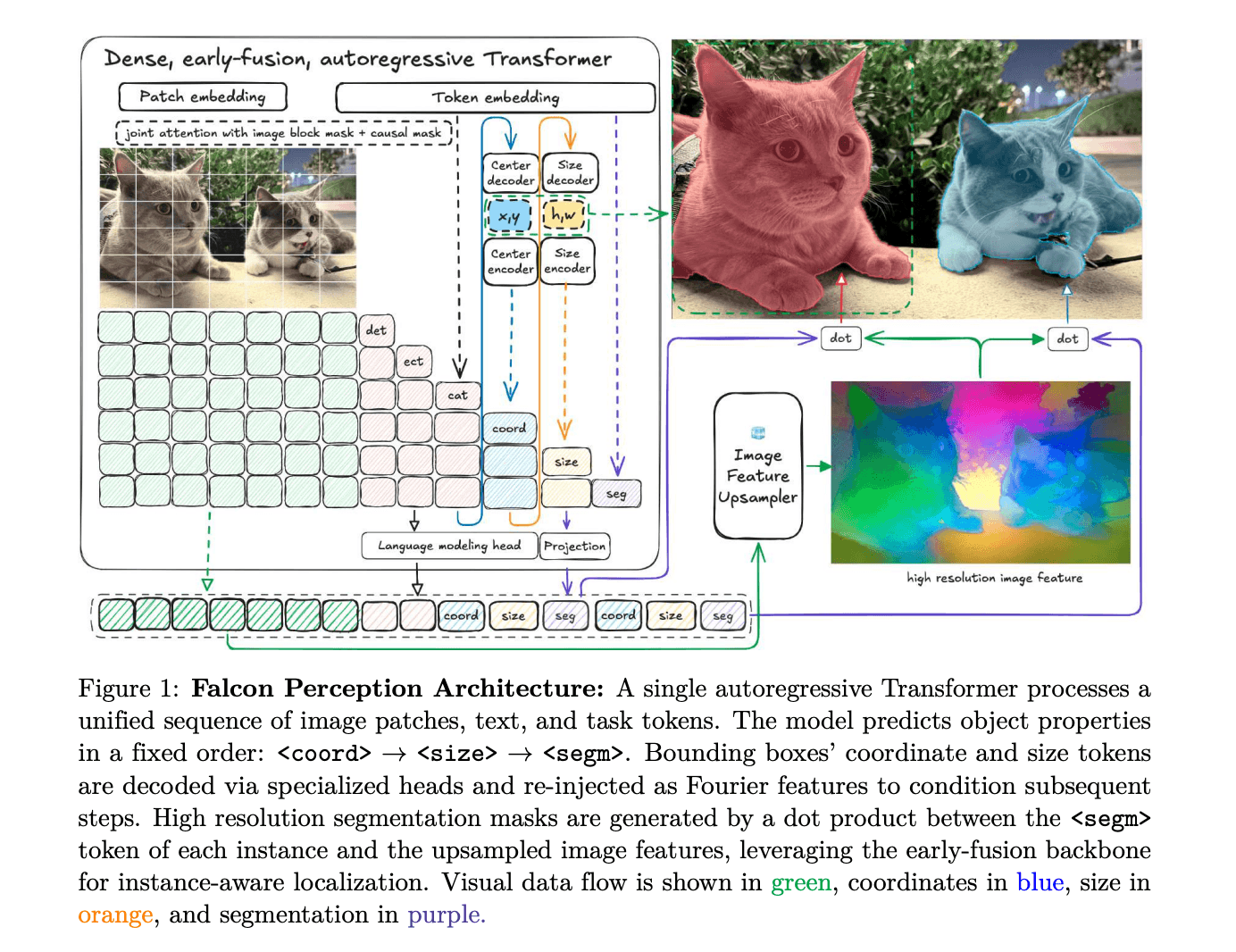
TII Releases Falcon Perception: A 0.6B-Parameter Early-Fusion Transformer for Open-Vocabulary Grounding and Segmentation from Natural Language Prompts
MarkTechPost

The house asked me a question
Dev.to

Precision Clip Selection: How AI Suggests Your In and Out Points
Dev.to


