
EVT-Based Generative AI for Tail-Aware Channel Estimation
arXiv cs.AI / 4/29/2026
💬 OpinionDeveloper Stack & InfrastructureModels & Research
Key Points
- The paper targets ultra-reliable low-latency communication (URLLC) in 5G/beyond networks by improving tail-aware wireless channel estimation, where rare events drive stringent packet error and latency requirements.
- It proposes combining extreme value theory (EVT) with generative AI, using EVT to model channel tail distributions and generative AI to augment data and estimate channel parameters from limited samples.
- The authors argue that EVT helps generative models better capture extreme events that are typically missed during channel characterization.
- Using an automotive experimental dataset, the approach improves data augmentation for extreme quantiles and achieves online channel distribution estimation with fewer samples than traditional analytical EVT and generative baselines.
Related Articles
THE FIFTH TRANSMISSION: THE GRADIENT IS THE GOVERNMENT
Reddit r/artificial
Looking for feedback on OpenVidya: an open-source AI classroom layer for NCERT/CBSE [R]
Reddit r/MachineLearning
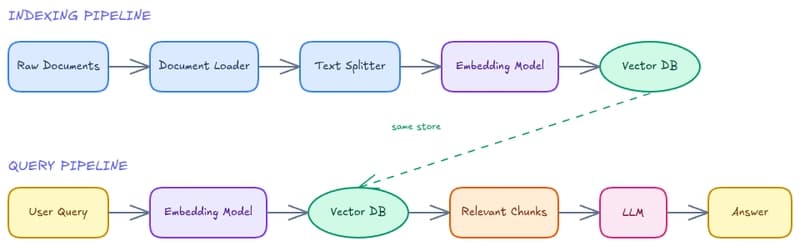
RAG Series (1): Why LLMs Need External Memory
Dev.to
One Open Source Project a Day (No. 54): Warp - The AI-Native Rust Terminal
Dev.to

Automating Your Aquaponics Balance: The AI Biomass Ratio Engine
Dev.to


