
Deep kernel video approximation for unsupervised action segmentation
arXiv cs.CV / 4/24/2026
📰 NewsIdeas & Deep AnalysisModels & Research
Key Points
- The paper presents a method for per-video unsupervised action segmentation that works when large-scale dataset storage is limited or disallowed.
- It segments videos by learning an approximation in deep kernel space and measuring how close the approximated frame distribution is to the original using maximum mean discrepancy (MMD).
- The approach uses neural tangent kernels (NTKs) to define the kernel space, improving descriptive power versus fixed kernels and avoiding trivial solutions when learning both the approximation and the kernel.
- Compared with state-of-the-art per-video techniques across six benchmarks, the method shows competitive performance and higher F1 scores, including cases where the number of segments is unknown.
Related Articles
The 67th Attempt: When Your "Knowledge Management" System Becomes a Self-Fulfilling Prophecy of Excellence
Dev.to
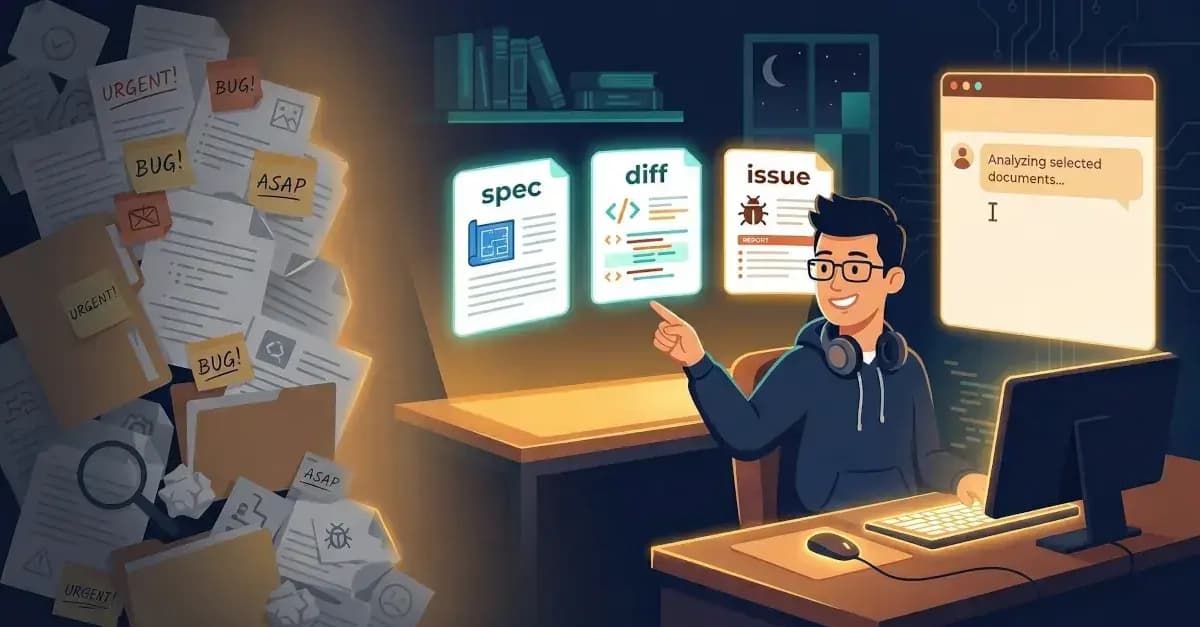
Context Engineering for Developers: A Practical Guide (2026)
Dev.to
GPT-5.5 is here. So is DeepSeek V4. And honestly, I am tired of version numbers.
Dev.to
I Built an AI Image Workflow with GPT Image 2.0 (+ Fixing Its Biggest Flaw)
Dev.to
Max-and-Omnis/Nemotron-3-Super-64B-A12B-Math-REAP-GGUF
Reddit r/LocalLLaMA


