
CascadeDebate: Multi-Agent Deliberation for Cost-Aware LLM Cascades
arXiv cs.CL / 4/15/2026
📰 NewsSignals & Early TrendsIdeas & Deep AnalysisModels & Research
Key Points
- CascadeDebate proposes a cost-aware LLM cascading framework that reduces premature escalations caused by ambiguous queries and under-confidence at each tier’s decision boundary.
- It inserts multi-agent deliberation only when a confidence-based router detects uncertainty, so lightweight agent ensembles resolve ambiguities before higher-cost model upgrades or expert handoffs.
- The architecture dynamically varies test-time compute by alternating between single-model inference and selective multi-agent deliberation across model scales.
- Experiments on five benchmarks across science, medicine, and general knowledge show up to 26.75% improvement over strong single-model cascades and standalone multi-agent systems.
- An online threshold optimizer is highlighted as crucial for robust performance, delivering large gains (20.98% to 52.33% relative improvement) versus fixed escalation policies and better adapting to real-world query distributions.
Related Articles

Black Hat Asia
AI Business

The Complete Guide to Better Meeting Productivity with AI Note-Taking
Dev.to

5 Ways Real-Time AI Can Boost Your Sales Call Performance
Dev.to
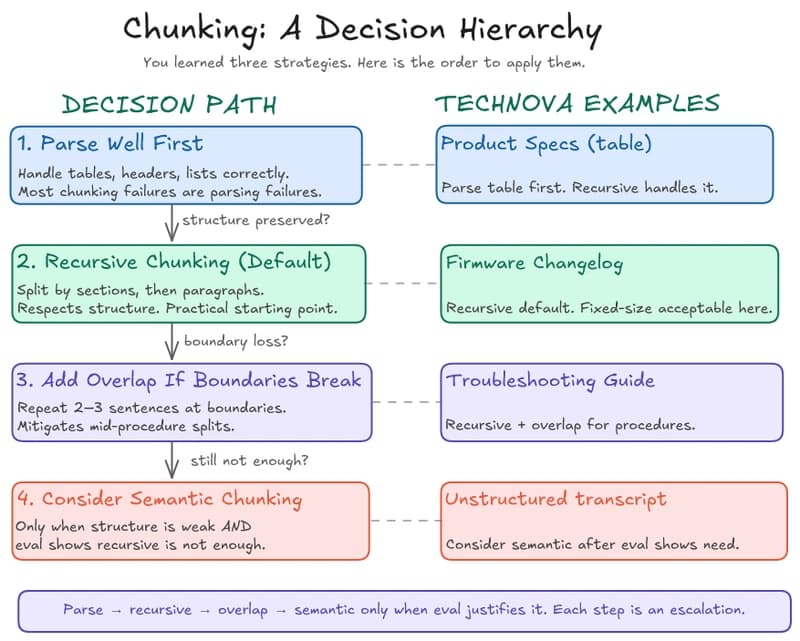
RAG in Practice — Part 4: Chunking, Retrieval, and the Decisions That Break RAG
Dev.to
Why dynamically routing multi-timescale advantages in PPO causes policy collapse (and a simple decoupled fix) [R]
Reddit r/MachineLearning


