
LLM-Guided Semantic Bootstrapping for Interpretable Text Classification with Tsetlin Machines
arXiv cs.CL / 4/15/2026
💬 OpinionIdeas & Deep AnalysisModels & Research
Key Points
- The paper addresses a tradeoff in text classification by combining pretrained language model (PLM) semantic strength with the interpretability of Tsetlin Machines (TMs).
- It introduces an LLM-guided semantic bootstrapping pipeline where, for each class label, an LLM generates sub-intents that drive synthetic data creation via a three-stage curriculum (seed, core, enriched).
- A Non-Negated Tsetlin Machine (NTM) is trained to extract high-confidence, interpretable literals that serve as semantic cues derived from the LLM.
- By injecting these learned cues into real data, the TM can better align clause-level logic with LLM-inferred semantics without needing embeddings or runtime LLM calls.
- Experiments across multiple text classification tasks show improved interpretability and accuracy over vanilla TMs, reaching performance comparable to BERT while remaining fully symbolic and efficient.
Related Articles
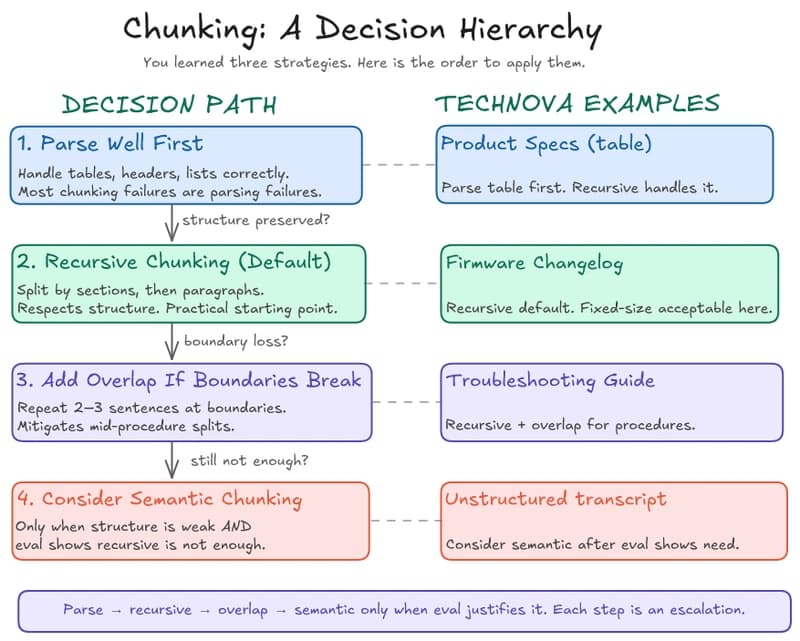
RAG in Practice — Part 4: Chunking, Retrieval, and the Decisions That Break RAG
Dev.to
Why dynamically routing multi-timescale advantages in PPO causes policy collapse (and a simple decoupled fix) [R]
Reddit r/MachineLearning

How AI Interview Assistants Are Changing Job Preparation in 2026
Dev.to

Consciousness in Artificial Intelligence: Insights from the Science ofConsciousness
Dev.to

NEW PROMPT INJECTION
Dev.to


