
GAM: Hierarchical Graph-based Agentic Memory for LLM Agents
arXiv cs.AI / 4/15/2026
📰 NewsSignals & Early TrendsIdeas & Deep AnalysisModels & Research
Key Points
- The paper proposes GAM, a hierarchical graph-based agentic memory framework designed to improve LLM agents’ long-term coherence by separating memory encoding from consolidation.
- GAM decouples ongoing dialogue via an event progression graph and only integrates it into a topic associative network when semantic shifts occur, aiming to reduce interference from transient noise.
- It adds a graph-guided, multi-factor retrieval strategy to increase context precision during long-horizon conversations.
- Experiments on LoCoMo and LongDialQA report consistent improvements over state-of-the-art baselines in reasoning accuracy and efficiency.
Related Articles

Black Hat Asia
AI Business

The Complete Guide to Better Meeting Productivity with AI Note-Taking
Dev.to

5 Ways Real-Time AI Can Boost Your Sales Call Performance
Dev.to
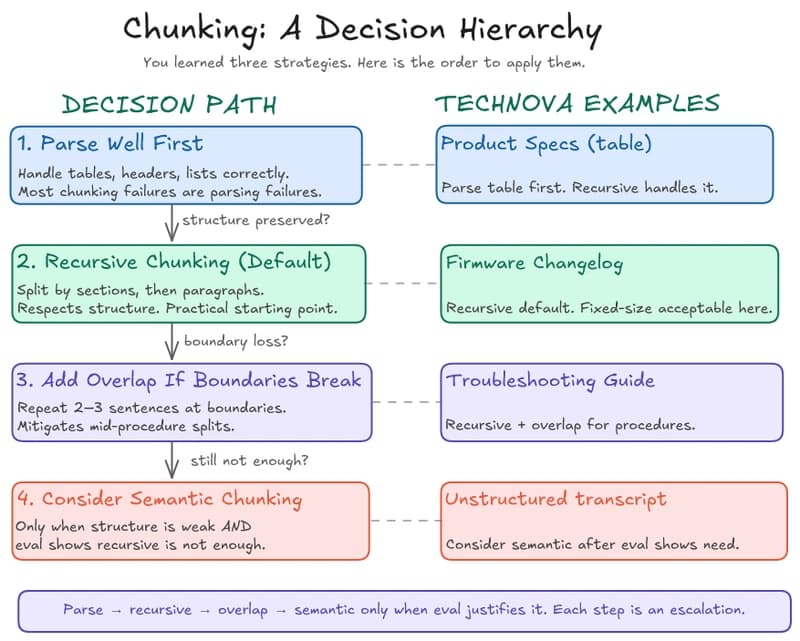
RAG in Practice — Part 4: Chunking, Retrieval, and the Decisions That Break RAG
Dev.to
Why dynamically routing multi-timescale advantages in PPO causes policy collapse (and a simple decoupled fix) [R]
Reddit r/MachineLearning


