
Drug Synergy Prediction via Residual Graph Isomorphism Networks and Attention Mechanisms
arXiv cs.LG / 4/24/2026
📰 NewsIdeas & Deep AnalysisModels & Research
Key Points
- The paper tackles the challenge of efficiently predicting synergy in combination drug therapies, where testing all drug pairs is too costly.
- It proposes ResGIN-Att, a collaborative graph neural network that combines drug molecular structures, drug-drug interaction signals, and cell-line genomic profiles to improve synergy prediction accuracy.
- The Residual Graph Isomorphism Network extracts multi-scale topological features while residual connections help reduce over-smoothing in deeper layers.
- An adaptive LSTM fuses structural information across local-to-global scales, and a cross-attention module explicitly models drug-drug interactions and highlights important chemical substructures.
- Experiments on five public benchmark datasets show competitive results versus strong baselines, along with improved generalization and robustness.
Related Articles
The 67th Attempt: When Your "Knowledge Management" System Becomes a Self-Fulfilling Prophecy of Excellence
Dev.to
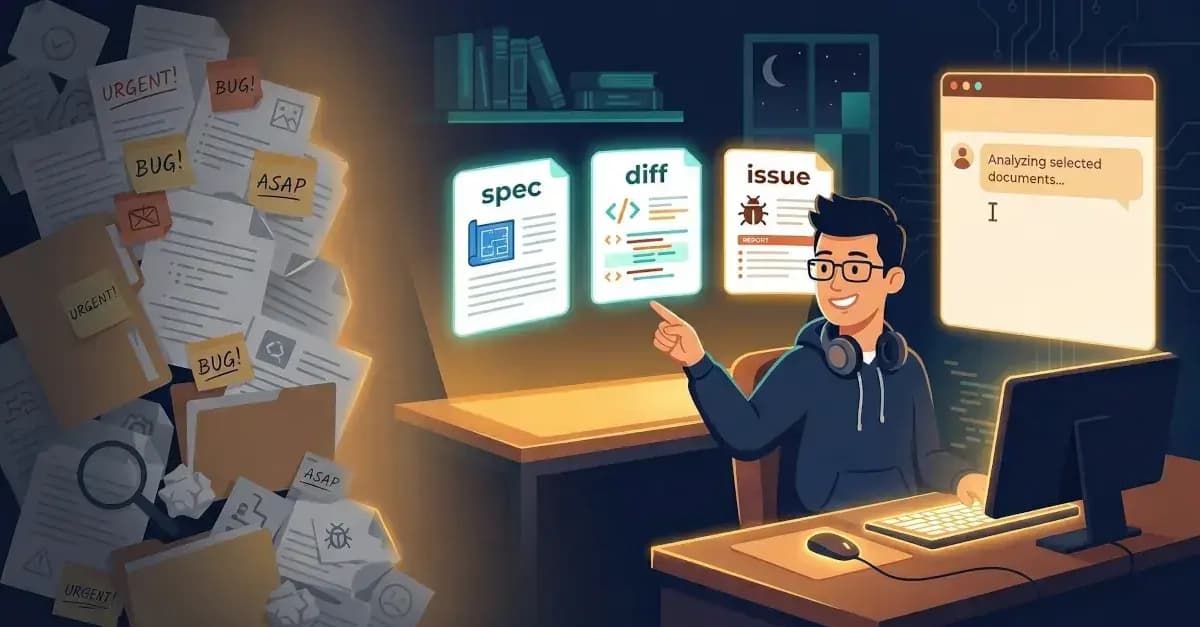
Context Engineering for Developers: A Practical Guide (2026)
Dev.to
GPT-5.5 is here. So is DeepSeek V4. And honestly, I am tired of version numbers.
Dev.to
I Built an AI Image Workflow with GPT Image 2.0 (+ Fixing Its Biggest Flaw)
Dev.to
Max-and-Omnis/Nemotron-3-Super-64B-A12B-Math-REAP-GGUF
Reddit r/LocalLLaMA


