
Portfolio Optimization Proxies under Label Scarcity and Regime Shifts via Bayesian and Deterministic Students under Semi-Supervised Sandwich Training
arXiv cs.LG / 4/17/2026
📰 NewsIdeas & Deep AnalysisModels & Research
Key Points
- The paper introduces a machine-learning-assisted portfolio optimization framework aimed at handling label scarcity and uncertain market regimes.
- It uses a teacher–student pipeline where a CVaR optimizer produces supervisory labels, and Bayesian and deterministic neural models are trained with both real data (104 labeled observations) and synthetic data.
- Synthetic training data is created via a factor-based model with t-copula residuals to expand effective training beyond the small labeled sample.
- The authors evaluate four student models across controlled synthetic experiments, in-distribution real-market testing, and cross-universe generalization, using a rolling evaluation protocol with periodic fine-tuning and reset for stability.
- Results indicate the student models can match or outperform the CVaR teacher in multiple scenarios, with better robustness to regime shifts and lower portfolio turnover.
Related Articles
ChatGPT for Nurses: Prompts That Help You Document, Communicate, and Study
Dev.to
I Added a Stopwatch to My AI in 1 LOC Using the Livingrimoire While Corporations Need a Year
Dev.to
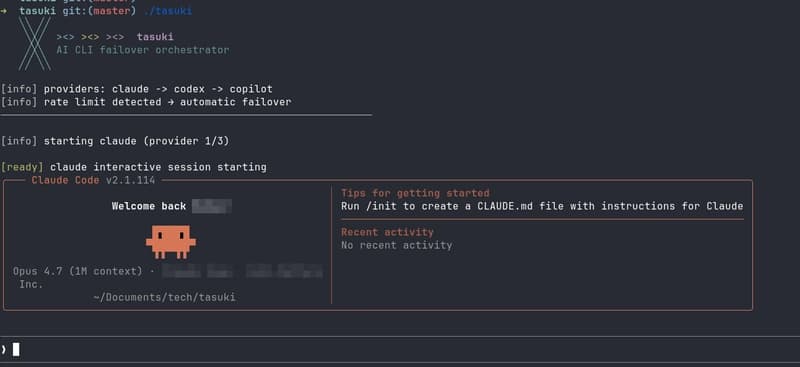
Built tasuki — an AI CLI Orchestrator that Seamlessly Hands Off Between Tools
Dev.to

I built a GNOME extension for Codex with local/remote history, live filters, Markdown export, and a read-only MCP server
Reddit r/artificial
I Built an Open‑ Source OS for AI Agents – And It’s Ready for You
Dev.to


