
AI Trust OS -- A Continuous Governance Framework for Autonomous AI Observability and Zero-Trust Compliance in Enterprise Environments
arXiv cs.AI / 4/7/2026
💬 OpinionDeveloper Stack & InfrastructureIdeas & Deep Analysis
Key Points
- The paper argues that enterprise governance for LLMs and multi-agent workflows is failing because organizations cannot govern systems they cannot continuously observe, especially with compliance approaches designed for deterministic web apps.
- It proposes “AI Trust OS,” a telemetry-driven, always-on governance architecture that continuously discovers AI systems, collects control assertions via automated probes, and synthesizes trust artifacts.
- The framework is built on four principles: proactive discovery, telemetry evidence instead of manual attestation, continuous posture rather than point-in-time audits, and architecture-backed proof rather than relying on policy documents.
- It uses a zero-trust telemetry boundary with ephemeral read-only probes to validate structural metadata while avoiding ingress of source code or payload-level PII.
- An “AI Observability Extractor Agent” is described to scan LangSmith and Datadog LLM telemetry, register previously undocumented AI systems, and provide a way to ground governance maturity evidence in empirical observability signals mapped to ISO 42001, the EU AI Act, SOC 2, GDPR, and HIPAA.
Related Articles
[R] The ECIH: Model Modeling Agentic Identity as an Emergent Relational State [R]
Reddit r/MachineLearning
Melhores Alternativas ao NightCafe em 2026: Acesso API, Recursos Empresariais, Menores Custos
Dev.to
Artificial Intelligence and Life in 2030: The One Hundred Year Study onArtificial Intelligence
Dev.to
Stop waiting for Java to rebuild! AI IDEs + Zero-Latency Hot Reload = Magic
Dev.to
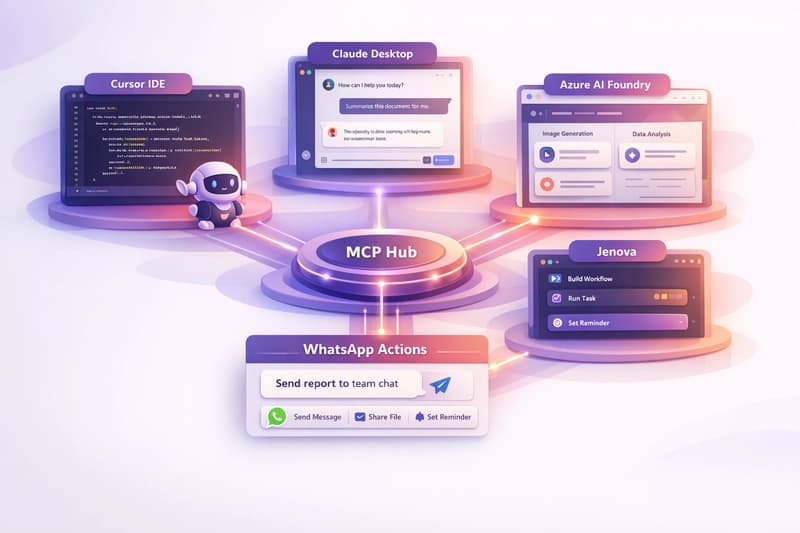
Whapi-mcp: 165 WhatsApp Tools for AI Agents (2026)
Dev.to


