
ScenarioControl: Vision-Language Controllable Vectorized Latent Scenario Generation
arXiv cs.RO / 4/21/2026
💬 OpinionDeveloper Stack & InfrastructureModels & Research
Key Points
- ScenarioControl is presented as a vision-language control mechanism for learned driving scenario generation, taking a text prompt or an input image to synthesize realistic 3D scenario rollouts.
- The approach generates temporally consistent scenes that include road maps, reactive actors (with 3D bounding boxes over time), pedestrians, driving infrastructure, and ego-camera observations.
- It operates in a vectorized latent space jointly representing road structure and dynamic agents, and uses a cross-global control mechanism combining cross-attention with a lightweight global-context branch to improve controllability while maintaining realism.
- The authors release a training/evaluation dataset with text annotations aligned to vectorized map structures and report that ScenarioControl achieves strong control adherence and fidelity versus compared methods.
- The resulting system supports long-horizon continuation of driving scenarios and can generate rollouts from different actors’ perspectives in a coordinated way.
Related Articles
A practical guide to getting comfortable with AI coding tools
Dev.to
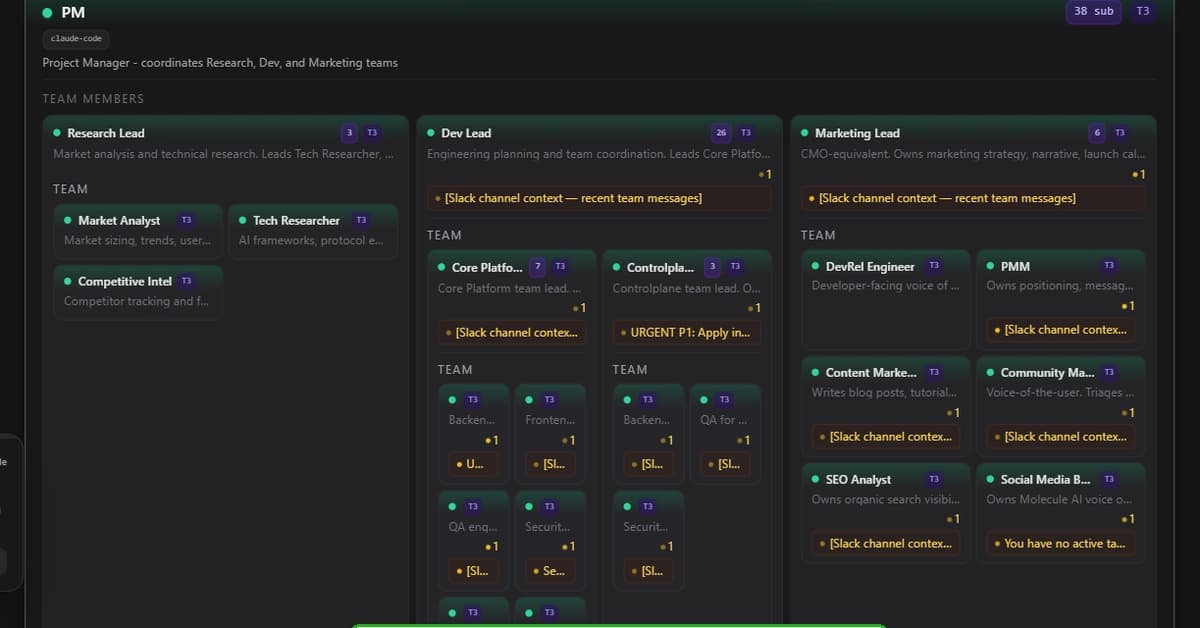
We built it during the NVIDIA DGX Spark Full-Stack AI Hackathon — and it ended up winning 1st place overall 🏆
Dev.to

Stop Losing Progress: Setting Up a Pro Jupyter Workflow in VS Code (No More Colab Timeouts!)
Dev.to
🚀 Major BrowserAct CLI Update
Dev.to
Building AgentOS: Why I’m Building the AWS Lambda for Insurance Claims
Dev.to


