
V-OCBF: Learning Safety Filters from Offline Data via Value-Guided Offline Control Barrier Functions
arXiv cs.RO / 4/3/2026
💬 OpinionIdeas & Deep AnalysisModels & Research
Key Points
- The paper proposes V-OCBF (Value-Guided Offline Control Barrier Functions), a framework for learning safety filters from offline demonstrations to achieve strict state-wise safety without online interaction.
- Unlike prior Safe Offline RL methods that focus on soft expected-cost constraints, V-OCBF learns a neural control barrier function designed to enforce forward invariance.
- The method is model-free: it does not require access to the system dynamics model and instead uses a recursive finite-difference barrier update for learning the barrier over time.
- V-OCBF uses an expectile-based objective to reduce sensitivity to out-of-distribution actions and restricts updates to actions supported by the offline dataset.
- The learned barrier is integrated into a real-time controller via a Quadratic Program (QP), and the authors report fewer safety violations than baselines while retaining strong task performance across multiple case studies.
Related Articles

90000 Tech Workers Got Fired This Year and Everyone Is Blaming AI but Thats Not the Whole Story
Dev.to

Microsoft’s $10 Billion Japan Bet Shows the Next AI Battleground Is National Infrastructure
Dev.to
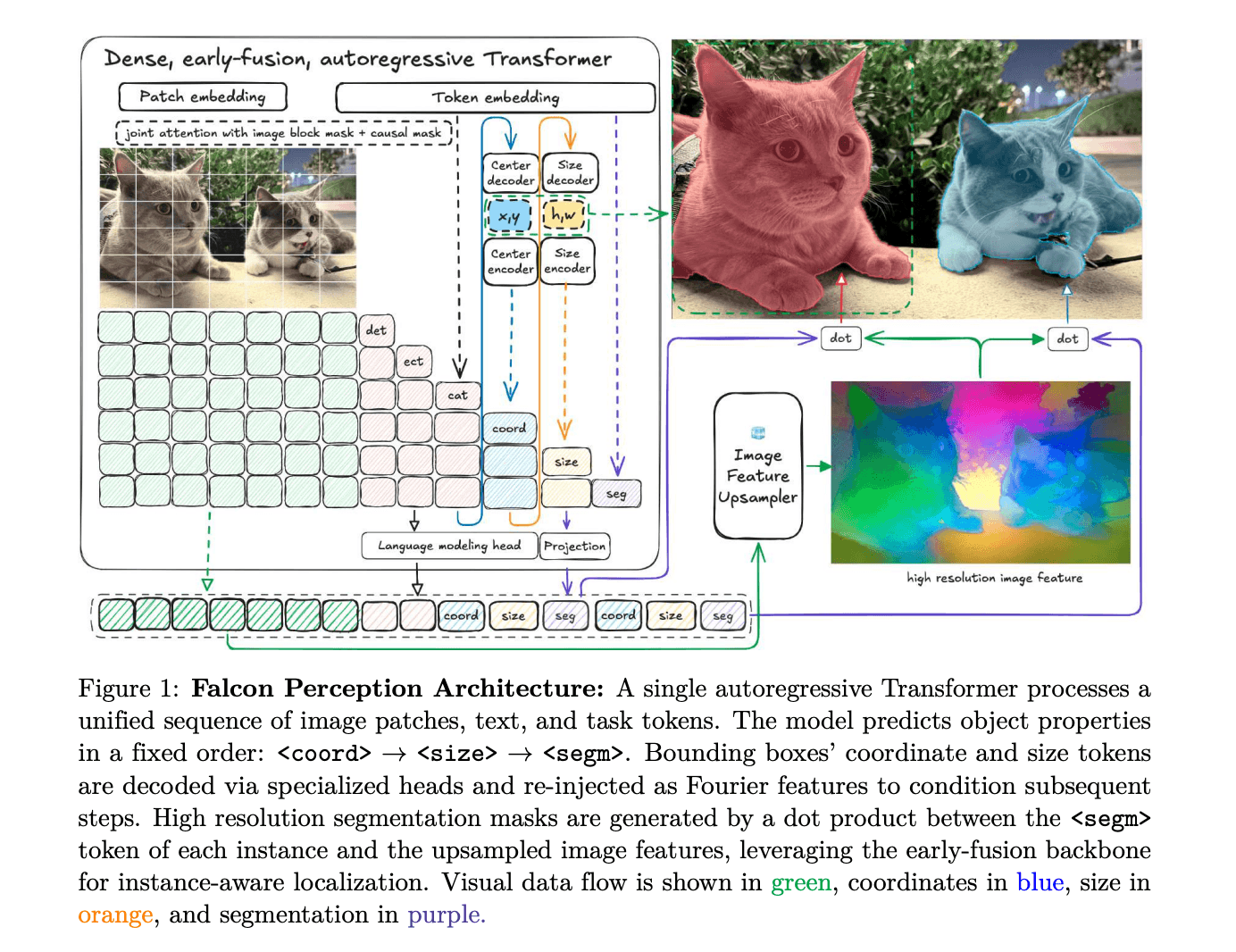
TII Releases Falcon Perception: A 0.6B-Parameter Early-Fusion Transformer for Open-Vocabulary Grounding and Segmentation from Natural Language Prompts
MarkTechPost

The house asked me a question
Dev.to

Precision Clip Selection: How AI Suggests Your In and Out Points
Dev.to


