
Learning to Staff: Offline Reinforcement Learning and Fine-Tuned LLMs for Warehouse Staffing Optimization
arXiv cs.LG / 3/27/2026
💬 OpinionSignals & Early TrendsIdeas & Deep AnalysisModels & Research
Key Points
- The paper studies machine learning methods to optimize real-time warehouse staffing decisions in semi-automated sortation systems, evaluating trade-offs across decision abstractions.
- It shows that custom Transformer policies trained with offline reinforcement learning on rich historical state representations can improve simulated throughput by 2.4% versus historical baselines.
- For higher-level, human-readable decision inputs, the authors test LLM-based approaches, comparing prompting, automatic prompt optimization, and fine-tuning strategies.
- They find that prompting alone is insufficient, but supervised fine-tuning combined with Direct Preference Optimization (using simulator-generated preference data) can match or slightly exceed hand-crafted simulator baselines.
- Overall, the work argues both offline RL (for task-specific architectures) and fine-tuned LLMs (for interpretable state abstraction and preference feedback loops) are viable for AI-assisted operational staffing.
広告
Related Articles

Got My 39-Agent System Audited Live. Here's What the Maturity Scorecard Revealed.
Dev.to

The Redline Economy
Dev.to

$500 GPU outperforms Claude Sonnet on coding benchmarks
Dev.to

From Scattershot to Sniper: AI for Hyper-Personalized Media Lists
Dev.to
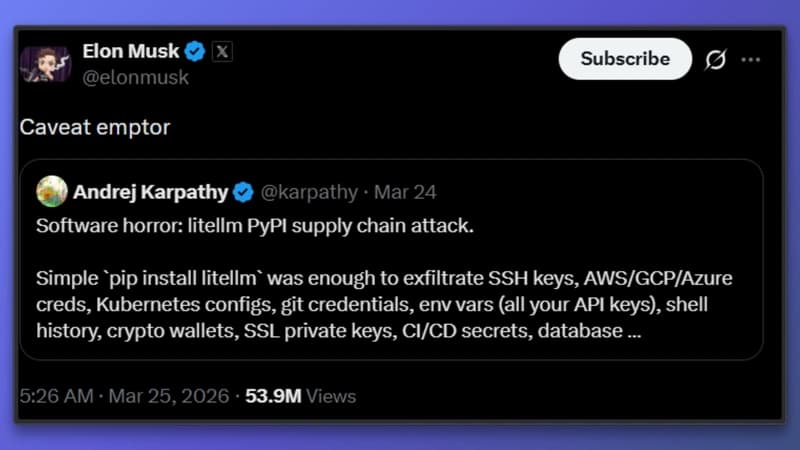
The LiteLLM Supply Chain Attack: A Wake-Up Call for AI Infrastructure
Dev.to


