
Reasoning-Guided Grounding: Elevating Video Anomaly Detection through Multimodal Large Language Models
arXiv cs.CV / 5/6/2026
📰 NewsDeveloper Stack & InfrastructureModels & Research
Key Points
- The paper introduces VANGUARD, a multimodal LLM/VLM framework that unifies video anomaly classification, spatial grounding, and chain-of-thought reasoning to improve interpretability and localization over prior VAD approaches.
- It uses a three-stage curriculum—classifier warmup with a frozen backbone, LoRA-based spatial grounding training, and chain-of-thought generation—showing staged optimization beats single-stage (monolithic) training.
- To address sparse VAD labels, the authors build a teacher-student annotation pipeline where Qwen3-VL-4B generates structured per-subclip reasoning trajectories, using manual cues from the UCA Dataset.
- GroundingDINO supplies bounding-box supervision, and results on UCF-Crime report 94% ROC-AUC and 84% F1, along with more reliable, spatially grounded anomaly localization and interpretable reasoning.
- Ablations and zero-shot experiments (XD-Violence, ShanghaiTech) suggest the structured reasoning functions as an implicit regularizer and supports cross-domain generalization without target-domain adaptation.
Related Articles

SIFS (SIFS Is Fast Search) - local code search for coding agents
Dev.to
BizNode's semantic memory (Qdrant) makes your bot smarter over time — it remembers past conversations and answers...
Dev.to
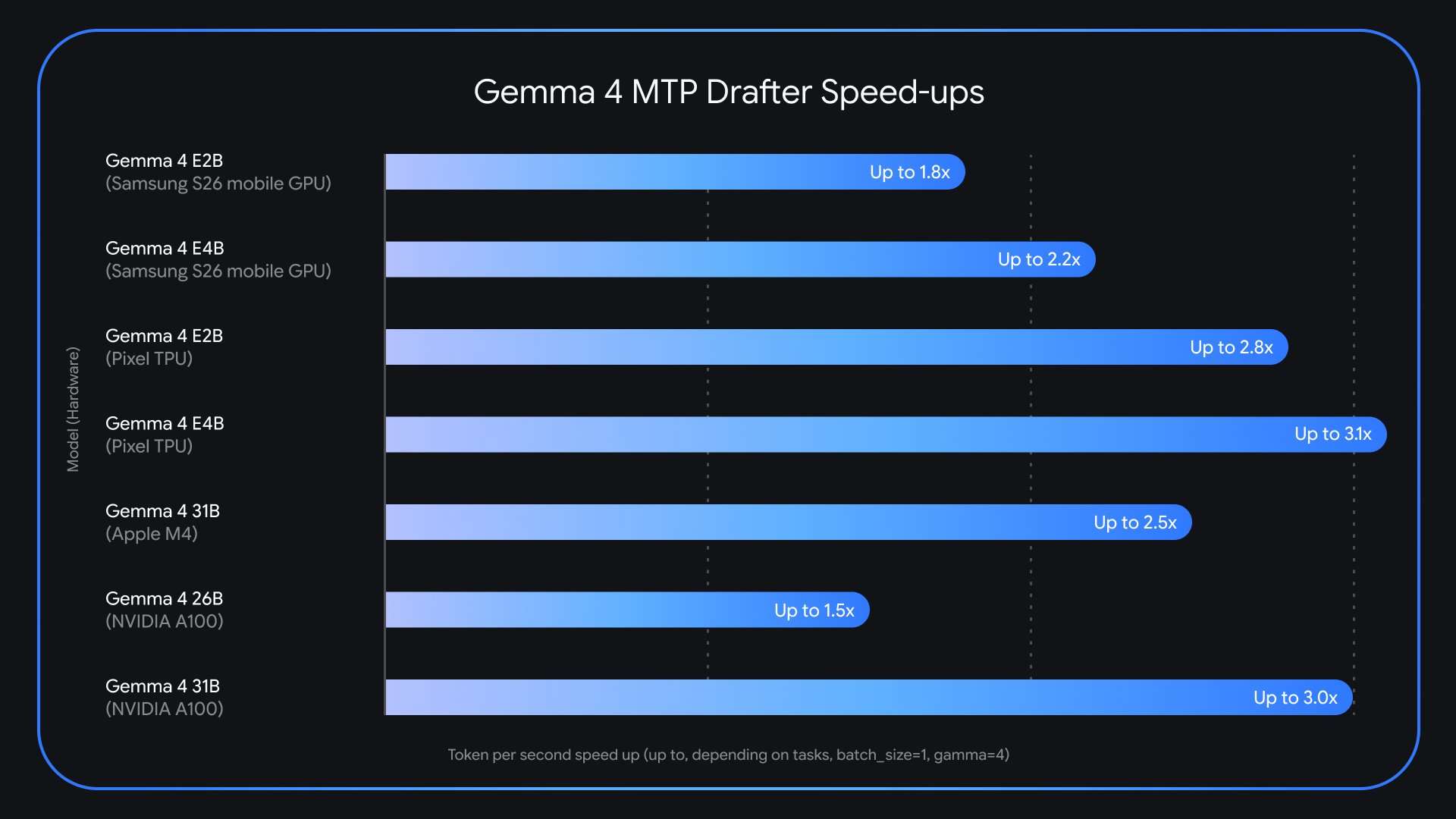
Google AI Releases Multi-Token Prediction (MTP) Drafters for Gemma 4: Delivering Up to 3x Faster Inference Without Quality Loss
MarkTechPost
Solidity LM surpasses Opus
Reddit r/LocalLLaMA

Quality comparison between Qwen 3.6 27B quantizations (BF16, Q8_0, Q6_K, Q5_K_XL, Q4_K_XL, IQ4_XS, IQ3_XXS,...)
Reddit r/LocalLLaMA


