
Lifecycle-Aware Federated Continual Learning in Mobile Autonomous Systems
arXiv cs.LG / 4/23/2026
📰 NewsDeveloper Stack & InfrastructureModels & Research
Key Points
- The paper introduces a lifecycle-aware dual-timescale federated continual learning (FCL) framework for distributed autonomous fleets that must adapt over long missions.
- It addresses key limitations of prior work by using layer-selective protection to handle different forgetting sensitivities across network layers and by explicitly managing both short-term forgetting and long-term cumulative drift.
- The proposed method combines a layer-selective rehearsal strategy for training-time (pre-forgetting) stability with a rapid post-forgetting knowledge recovery strategy to restore performance after long-term degradation.
- The authors provide theoretical analysis of heterogeneous forgetting dynamics and argue that long-term degradation is inevitable, motivating the need for recovery mechanisms.
- Experiments report up to an 8.3% mIoU improvement over the strongest federated baseline and up to 31.7% over conventional fine-tuning, with additional validation via deployment on a real rover testbed under realistic constraints.
Related Articles

Trajectory Forecasts in Unknown Environments Conditioned on Grid-Based Plans
Dev.to
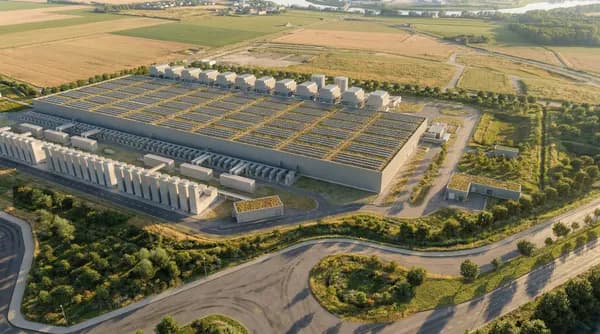
Elevating Austria: Google invests in its first data center in the Alps.
Google Blog
OpenAI Just Named It Workspace Agents. We Open-Sourced Our Lark Version Six Months Ago
Dev.to

GPT Image 2 Subject-Lock Editing: A Practical Guide to input_fidelity
Dev.to
AI Tutor That Works Offline — Study Anywhere with EaseLearn AI
Dev.to


