
From Tokens To Agents: A Researcher's Guide To Understanding Large Language Models
arXiv cs.CL / 3/23/2026
📰 NewsIdeas & Deep AnalysisModels & Research
Key Points
- The chapter identifies six essential components of LLMs—pre-training data, tokenization and embeddings, transformer architecture, probabilistic generation, alignment, and agentic capabilities—and analyzes their technical foundations and research implications.
- It presents a framework for critically evaluating when and how LLMs fit a given research need, rather than offering prescriptive usage guidelines.
- It aims to make LLM concepts comprehensible to non-experts by bridging theory with practical interpretation.
- It demonstrates the framework with an extended case study on simulating social media dynamics using LLM-based agents.
広告
Related Articles

Got My 39-Agent System Audited Live. Here's What the Maturity Scorecard Revealed.
Dev.to

The Redline Economy
Dev.to

$500 GPU outperforms Claude Sonnet on coding benchmarks
Dev.to

From Scattershot to Sniper: AI for Hyper-Personalized Media Lists
Dev.to
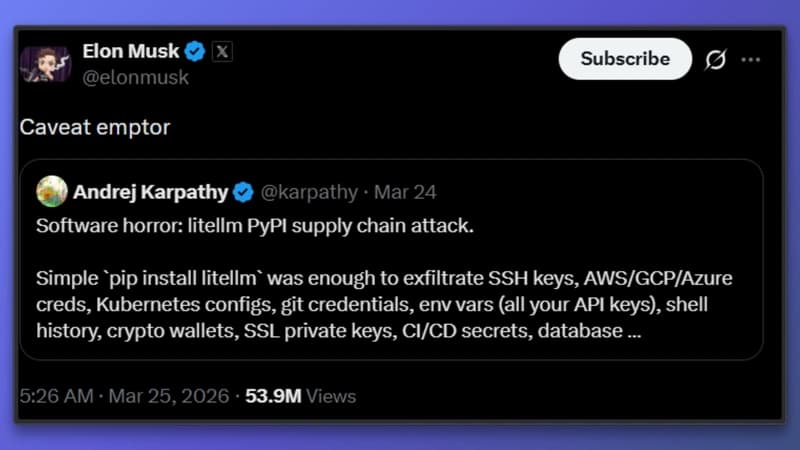
The LiteLLM Supply Chain Attack: A Wake-Up Call for AI Infrastructure
Dev.to


