
Orientation-Aware Unsupervised Domain Adaptation for Brain Tumor Classification Across Multi-Modal MRI
arXiv cs.CV / 5/6/2026
💬 OpinionIdeas & Deep AnalysisModels & Research
Key Points
- The paper addresses poor real-world generalization of deep learning-based brain tumor classifiers caused by limited labeled MRI data and domain shifts across institutions (different scanners, protocols, and contrast settings).
- It proposes an orientation-aware unsupervised domain adaptation framework that first classifies mixed 2D MRI slices into axial, sagittal, or coronal views and then uses an orientation-specific ResNet50-based feature extractor for tumor classification.
- To adapt from multi-modal labeled sources (e.g., T1, T2, FLAIR) to an unlabeled post-contrast T1 target domain, it applies slice-wise unsupervised adaptation with feature-level alignment via maximum mean discrepancy loss.
- Pseudo-label-guided adaptation is used alongside MMD to maintain class-discriminative information while learning domain-invariant representations.
- Experiments on the target domain reportedly outperform prior methods, indicating that combining orientation-specific learning, multi-modal transfer, and unsupervised alignment improves robustness for clinical deployment.
Related Articles

Top 10 Free AI Tools for Students in 2026: The Ultimate Study Guide
Dev.to

AI as Your Contingency Co-Pilot: Automating Wedding Day 'What-Ifs'
Dev.to
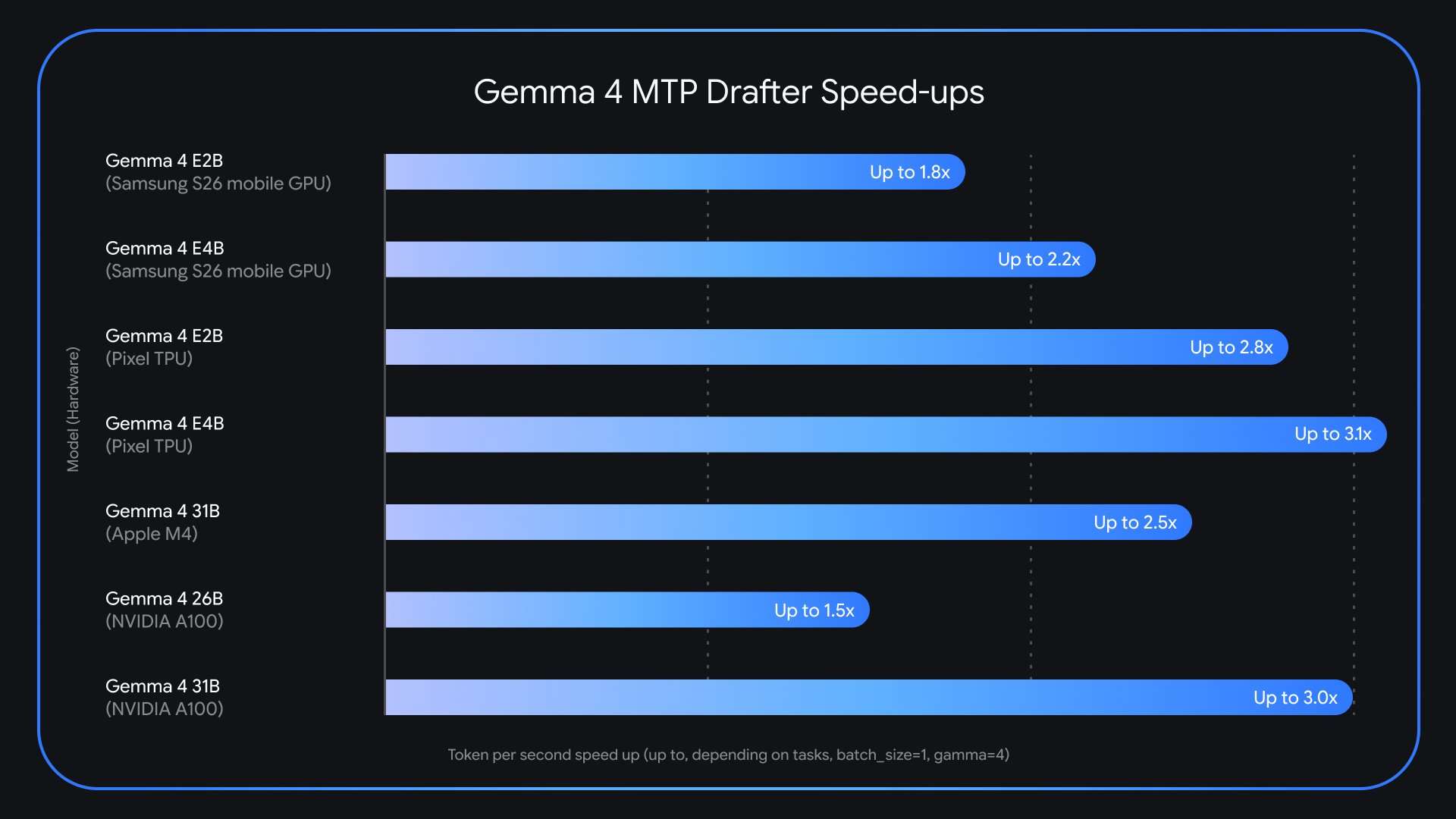
Google AI Releases Multi-Token Prediction (MTP) Drafters for Gemma 4: Delivering Up to 3x Faster Inference Without Quality Loss
MarkTechPost
When Claude Hallucinates in Court: The Latham & Watkins Incident and What It Means for Attorney Liability
MarkTechPost
Solidity LM surpasses Opus
Reddit r/LocalLLaMA


