
Can Current Agents Close the Discovery-to-Application Gap? A Case Study in Minecraft
arXiv cs.AI / 4/28/2026
📰 NewsSignals & Early TrendsIdeas & Deep AnalysisModels & Research
Key Points
- The study introduces SciCrafter, a Minecraft-based benchmark that operationalizes the “discovery-to-application” loop via parameterized redstone circuit tasks requiring agents to reproduce lamp-ignition patterns.
- In experiments with frontier code-agent setups using models like GPT-5.2, Gemini-3-Pro, and Claude-Opus-4.5, agent success plateaus at about a 26% success rate as task parameters scale, indicating a persistent gap between discovery and real engineering application.
- The researchers break the loop into four capacities—knowledge gap identification, experimental discovery, knowledge consolidation, and knowledge application—and use targeted interventions to estimate which gap each model struggles with.
- Results suggest knowledge application remains the largest overall bottleneck, but for frontier models the dominant issue is shifting toward knowledge gap identification (i.e., framing the right problems), and SciCrafter is released to help future research diagnose and improve this full loop.
Related Articles

Big Tech firms are accelerating AI investments and integration, while regulators and companies focus on safety and responsible adoption.
Dev.to
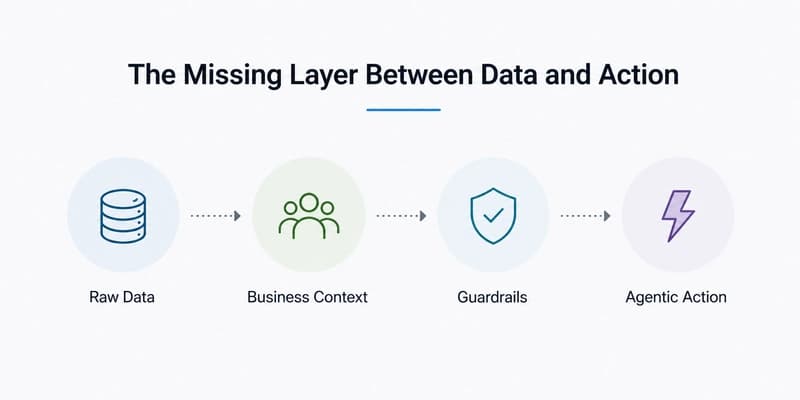
Everyone Wants AI Agents. Fewer Teams Are Ready for the Messy Business Context Behind Them
Dev.to
Free Registration & $20K Prize Pool: 2nd MLC-SLM Challenge 2026 on Multilingual Speech LLMs [N]
Reddit r/MachineLearning
AI 编程工具对比 2026:Claude Code vs Cursor vs Gemini CLI vs Codex
Dev.to

How I Improved My YouTube Shorts and Podcast Audio Workflow with AI Tools
Dev.to


